SBI Activity Updates: Fall 2026
Sonoma Biochar Initiative, A Project of the Sonoma Ecology Center
October 28, 2026
It’s been a full few months at the Sonoma Biochar Initiative, so here’s a quick look at where things stand.
Green schoolyards. On September 18 we celebrated the grand opening of the CAL FIRE-funded Green Schoolyard at Stoneman Elementary in Pittsburg, with three new outdoor classrooms, 42 shade trees, and environmental lessons from Sonoma Ecology Center educators for every first grader. Biochar blended with compost was used in all of the planting beds. We also submitted a full application to the CNRA Urban Greening program for a second green schoolyard at Los Medanos Elementary, also in Pittsburg, and in a very competitive round it has advanced to the Stage 2 site visit that was held on October 13th. Final awards will be announced in December.
Photos by Raymond Baltar
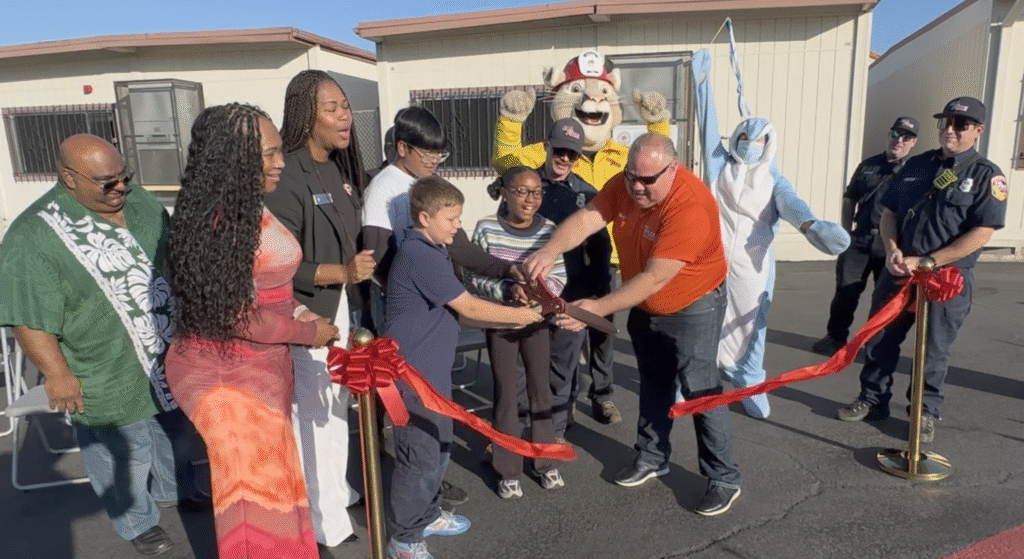
PUSD staff and scholars celebrate the completion of the green schoolyard construction activities.
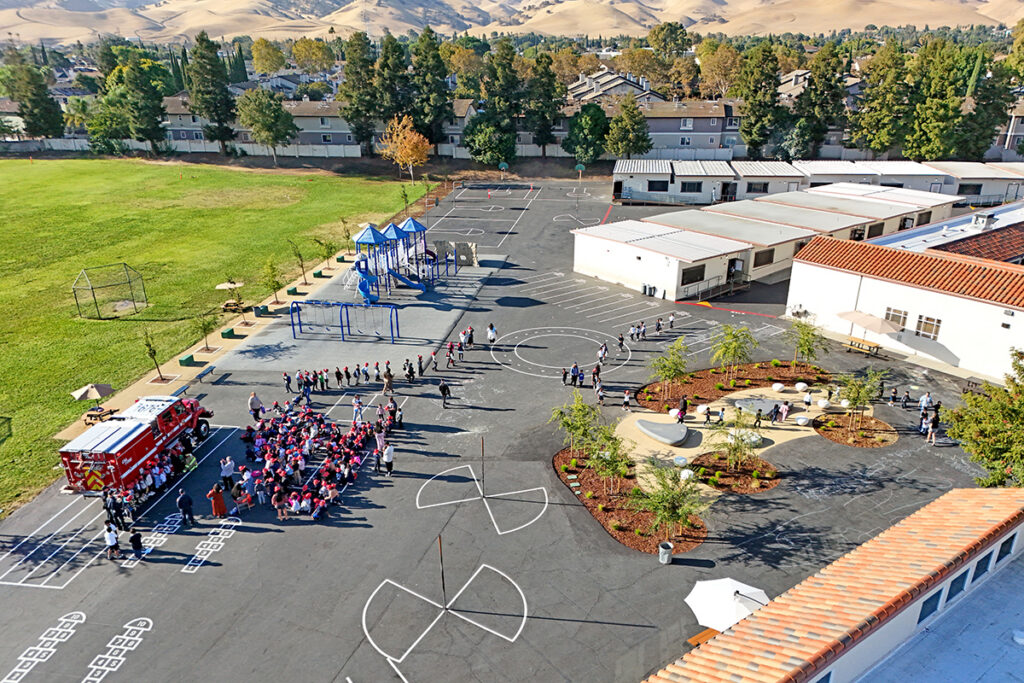
Cal Fire provided a truck and staff to teach the scholars about fire safety.
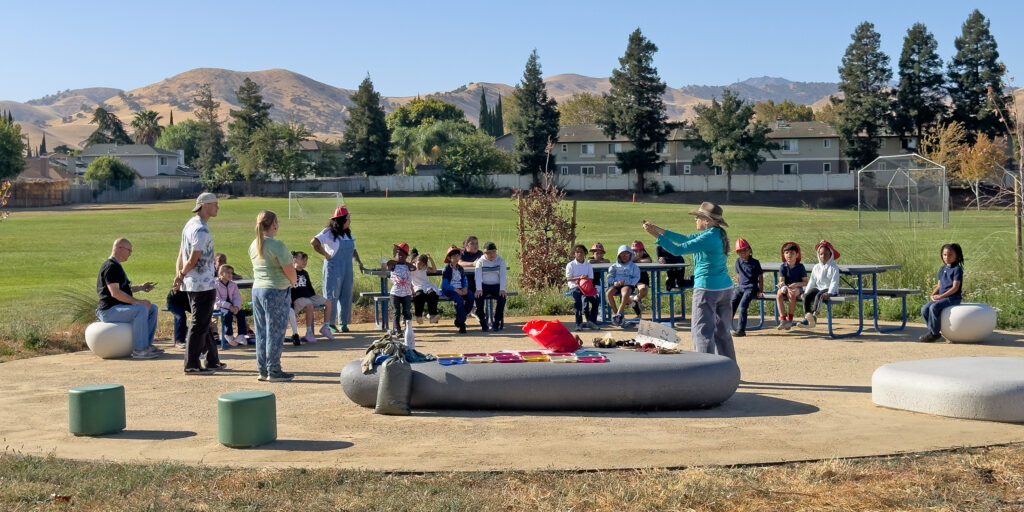
SEC Education Staff conduct an environmental education class at Stoneman Elementary.
Our ARTi pyrolysis unit. The unit at Napa Recycling in American Canyon is still paused while we wait on USEPA’s revised Letter of Determination, which will let us accept clean, cellulosic biomass from any qualified supplier. The language of this letter, which has taken over 9 months to revise, is now in the hands of senior EPA officials for their final review. Once we receive this revised letter, BAAQMD will update our permit and we can restart local, sustainable biochar production.
Research partnerships. Building on our work with Novato Sanitary District on co-pyrolysis of wood and biosolids, we helped assemble a research proposal led by UC Davis, with CSU Bakersfield and UC ANR, to study the feasibility and climate benefits of that approach. It was submitted in September and we expect to hear back this winter. We also partnered with UC Davis and several other universities on a CAL FIRE research proposal to use biochar as filtration media; it wasn’t funded this round, but we hope to bring it back in the next one.
Regional coordination. We will soon begin a consulting contract with Sonoma Water to help document local biomass utilization efforts and create opportunities for collaboration among stakeholders. In Marin, Raymond serves on the Marin Biomass Study Steering Committee and is helping shape a pilot-first biochar roundtable with Biomass Marin, the Marin Resource Conservation District, and other groups.
Google Meetings on Biochar. We coordinated a series of meetings (at their request) with staff from Google’s R & D sector focusing on Carbon Offset Credits and how Google could assist the growth of the biochar industry. We brought together industry veterans and innovators like Tom Miles, Roger Smullen, Jim Amonette, Eric Mayer, and others to discuss biochar production technologies, use cases, industry statistics, and barriers to scaling both supply and demand.
New proposals. We submitted a proposal to provide a permitting scope of work for a biochar project in Yolo County, another to a tree care company in Berkeley that wants to generate electricity to charge their electric trucks and tools, and also produce biochar from their wood chips, and another to the Sonoma Valley Rotary to purchase a new Ring of Fire kiln for our hands-on trainings. We are waiting to hear back on both.
Policy watch. We’ve been following California’s forest biomass legislation closely, including AB 706 (signed) and AB 1666 (vetoed), and what they mean for non-combustion approaches like biochar. We have also been attending bi-weekly Policy Committee meetings for the US Biochar Coalition.
Sharing what we learn: Using Claude and ChatGPT we updated our website in May, refreshing the design and updating content. along with a number of outreach materials we have used in our trainings for a number of years (about time!). We also created a Bi-Weekly Biochar Review agent that automatically searches for grants and other funding opportunities on a bi-weekly basis, streamlining the tedious process.
Learning through music. We’ve added a number of sustainability-focused songs to our Songs page for high school students, for those seeking a more meditative tone, plus a couple about monarch butterflies for younger kids. We’ll keep exploring music as a potentially powerful way to teach people about biochar and caring for the land.
Questions, or interested in a kiln training or a biochar project of your own? Reach Raymond at raymond@sonomaecologycenter.org.