Home Activities About Us About Biochar Resources Projects Contact Us
Sonoma County, California · Since 2009

Turning forest and agricultural "waste" into a workforce development and soil health solution.

We promote sustainable biochar production and use throughout California — reducing wildfire risk, locking carbon in the soil for centuries, and restoring the health of our agricultural lands.

2009
Founded
65+
Projects
3+GT
CO₂e Potential/yr
About SBI

California's longest-running biochar education initiative.

The Sonoma Biochar Initiative (SBI), founded in 2009 as a project of the Sonoma Ecology Center, has spent 15 years at the intersection of fire resilience, climate action, and regenerative agriculture.

Through grant-funded projects from CAL FIRE, the USDA, California DWR, and CDFA, we have established pyrolysis facilities and conducted demonstration projects statewide.

65+
Major Projects & Demonstrations
3+GT
CO₂e Annual Global Potential
10+
Agency Partners — CAL FIRE, USDA & More
1,000+
Years Biochar Remains in Soil
🌲
Wildfire Fuel Reduction
Converting dangerous forest slash into stable, soil-enriching biochar.
🌱
Agricultural Soil Health
Biochar + compost applications for California farms, ranches, and vineyards.
☁️
Carbon Sequestration
Locking atmospheric carbon in soil for centuries — measurable and permanent.
🎓
Education & Outreach
Workshops, webinars, demonstration projects, and school programs statewide.
🏭
Pyrolysis Infrastructure
Building community-scale biochar facilities like our ARTi unit in American Canyon.
Current Work

Latest from the field.

Our newest posts — updates, research, events, and project news from SBI. Newest first.

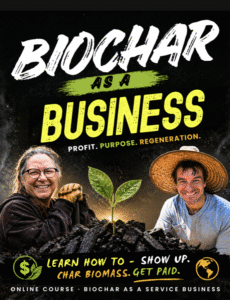
Biochar as a Business
Initiative News
June 5, 2026
Biochar as a Business
Check out this new online educational opportunity that will help build the in-field workforce we need to scale the production of biochar…
Read More →
Bi-Weekly Biochar Review
Initiative News
June 5, 2026
Bi-Weekly Biochar Review
Bi-Weekly Biochar Review — June 5, 2026 The American Biochar Institute (ABI) published new guidance on biochar standards on May 19, reinforcing…
Read More →
Webinar: Emissions & Sequestration Study Results, Now Available Online. 
Initiative News
April 5, 2026
Webinar: Emissions & Sequestration Study Results, Now Available Online. 
We are making our recent Webinar: Emissions & Sequestration Study Results, available online. If you were unable to attend the live webinar,…
Read More →
All Posts →

Join us in building California's biochar future.

Whether you're a farmer, forester, land manager, researcher, or simply someone who cares about fire risk and soil health — there's a role for you.

Flame-Cap Kiln Emissions Study — Final Results

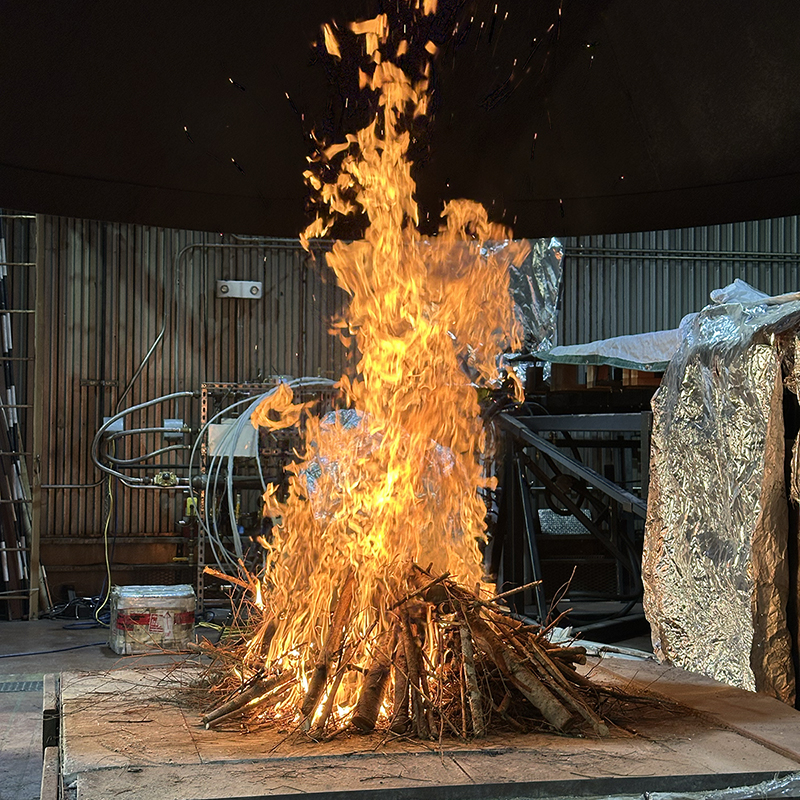
In 2024 and 2025, SBI concluded a two-phase, CAL FIRE-funded grant project measuring and comparing emissions produced by the Ring of Fire Kiln (produced by Wilson Biochar), the conservation burn pile technique, and the standard burn pile technique. This work was conducted in partnership with the San Luis Obispo APCD, the USFS Fire Science Lab, The Usal Redwood Forest Company, LCA researcher Jim Amonette from Washington State University, and SEC's restoration program led by Cuauhtemoc Villa.

Final results are being released in a webinar available here. This data is critical for fire managers, air quality regulators, and biochar producers seeking to understand the relative environmental footprints of different burn management strategies.

Emissions testing USFS Fire Science Lab Missoula Montana Burn comparison testing Missoula Montana USFS emissions research team Missoula

Community Pyrolysis — Production Temporarily on Pause

As many of you know who have followed our almost 5-year pyrolysis system saga we received our Authority to Construct permit in February of 2025, and we installed, commissioned, and ran the system successfully for 2 months. During this period we conducted extensive emissions testing, and because of a clerical error by the testing company we had to pause production to go through a health research assessment process, which we successfully completed and we were issued our Permit to Operate on November 17th, allowing us to start up operations. However, there is one more hoop we need to jump through to start operations: our permit specifies that we can accept feedstock from only one source and we need to be able to use any "clean, cellulosic biomass", so we need to change this language. We have requested this change and it has to wind its way through the BAAQMD bureaucracy but we are hopeful we will be able to start producing biochar soon. We WILL be making biochar soon and we will announce that here when we are up and running again.

SBI worked with collaborators Sitos, the US Biochar Coalition, and others to change a USEPA determination that had categorized clean cellulosic biomass as municipal solid waste requiring extensive and expensive monitoring.

ARTi pyrolysis unit ribbon cutting American Canyon April 2025

Greening 12 Schools — Pittsburg & Santa Rosa

In 2024, SBI received a CAL FIRE grant to manage planning for greening additions to 12 elementary schools - 4 in Santa Rosa and 8 in Pittsburg. Working with architects, landscape architects, and school communities, SBI developed plans that include planting shade trees, building outdoor classrooms, removing asphalt, building bioswales, and integrating biochar into all soil treatments.

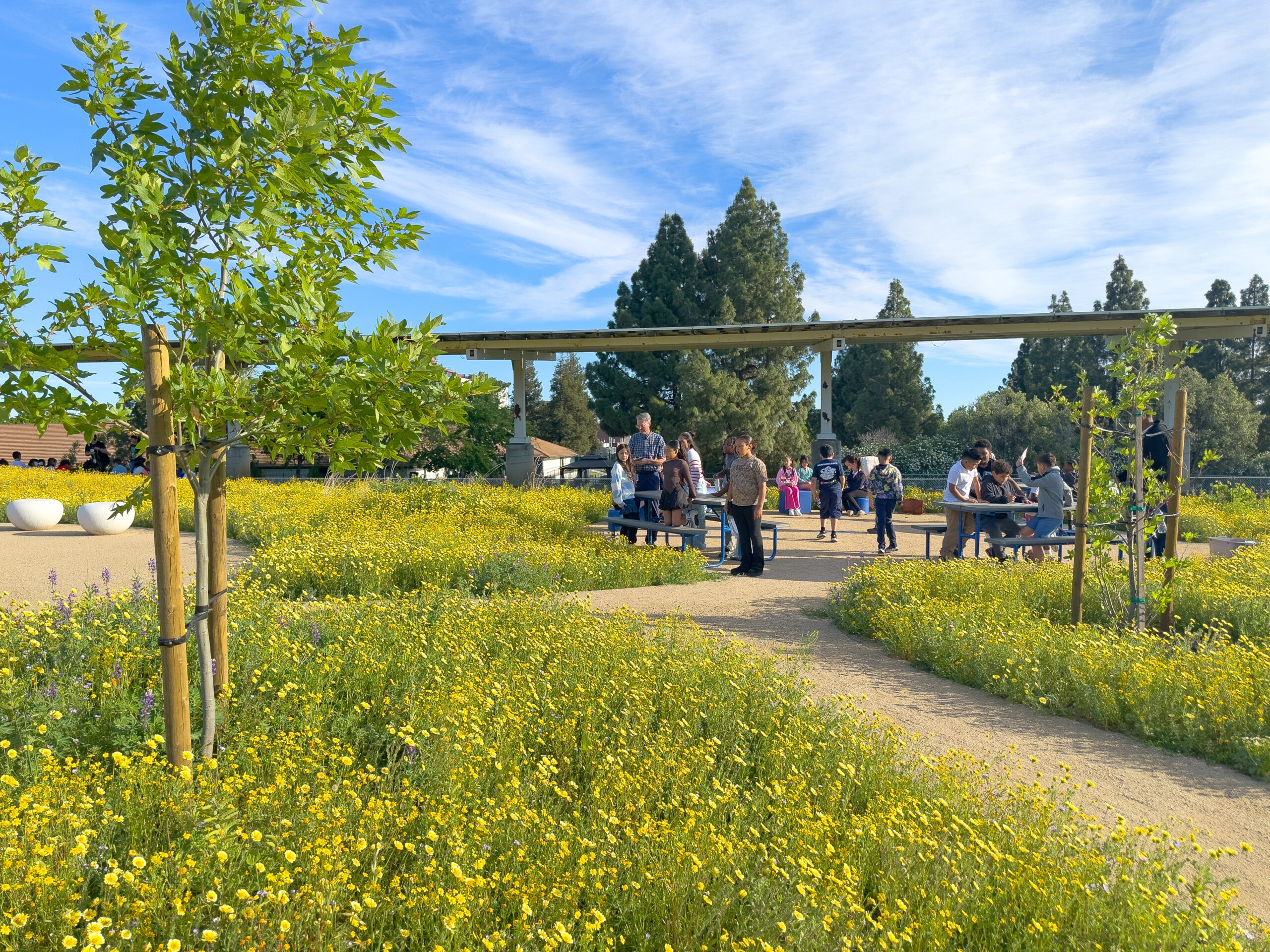
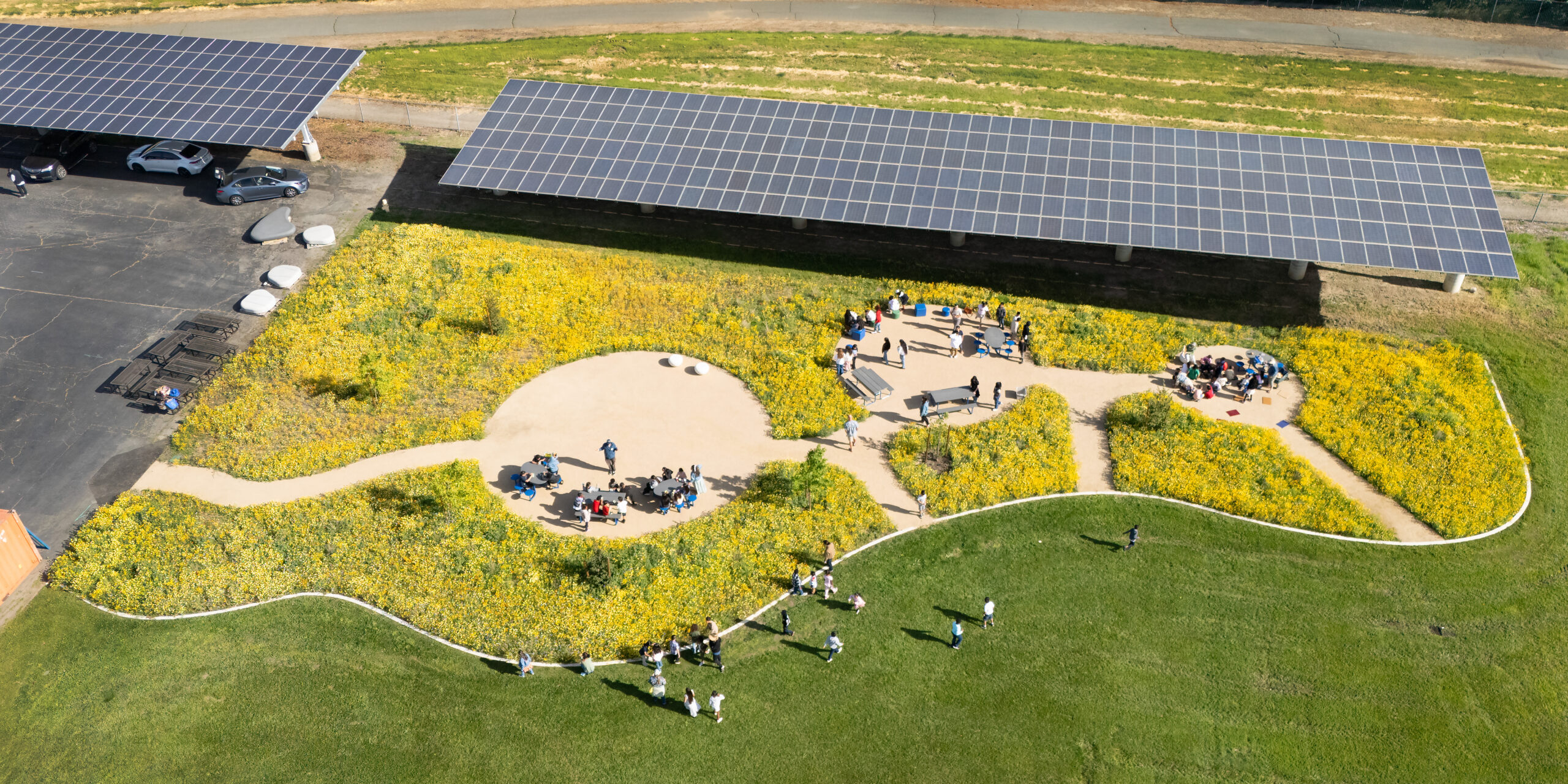
In 2025, SBI was awarded implementation funding for Stoneman Elementary in Pittsburg. Construction completed in December 2025 and environmental education programming for 2nd-5th graders began in February 2026. All projects include a curriculum element where SEC staff provide environmental education to every class.

Stoneman Elementary Green Schoolyard construction

Sonoma County Biomass Campus — Berry's Sawmill

SBI is contributing to a Sonoma County effort to assess biomass flows in the county and the viability of establishing a biomass campus and mill to better utilize lower-value, unmerchantable forest materials. Spearheaded by Temra Costa and Jeremy Fisher of Regenerative Forest Solutions and funded by the California Office of Land Use and Climate Innovation, this group is currently working to acquire the idled Berry's Sawmill near Cazadero, California.

Berry's Sawmill tour group Cazadero California

Vineyard Field Trial — Positive Results After 6th Harvest

Thanks to the continued monitoring by partners Josiah Hunt of Pacific Biochar and the Monterey Pacific vineyard management company, the Oasis Vineyard field trial - originally funded by the CA Department of Water Resources - is still recording positive results after the 6th harvest. This long-running trial has become one of the most robust biochar-in-viticulture datasets on the West Coast.

Read the 6th Harvest Report →

Scaling Biochar Forum — 27 Presentations Still Available

In 2020, SBI produced a two-day educational webinar series called the Scaling Biochar Forum - focused on what is needed to scale the developing biochar industry, featuring 27 speakers from across the country representing science, industry, entrepreneurial, and policy perspectives. All 20-30 minute presentations are available on the scalingbiochar.com website. Share them widely.

Visit ScalingBiochar.com →

Interested in getting involved?

Join our mailing list to stay current on biochar projects, webinars, and policy developments across California.

Dedicated to sustainable biochar education since 2009.

The Sonoma Biochar Initiative (SBI) is a project of the Sonoma Ecology Center (SEC). We are dedicated to promoting biochar education and its sustainable production and use throughout California.

SBI views accelerated use of biochar as key to soil restoration, as a watershed management tool, as a means to reduce mined industrial inputs like construction aggregates, sand, and coal-based activated carbon, and as a "fast mitigation technology" increasingly cited in international climate talks. Through grant funding, SBI has established or contributed to several local and state demonstration projects for biochar production and application.

Biochar production and use is booming — recognized by the IPCC, Lawrence Livermore National Labs, and ClimateWorks as one of the four least expensive and most scalable natural solutions for drawing down carbon from the atmosphere.
Founded
2009
Sonoma County, California

The Team

Raymond Baltar, gMBA
Director
Sustainability consultant, local businessman, and professional photographer focused on integrating business principles with energy conservation and environmental sustainability. Served on the Executive Committee of the Sierra Club, Redwood Chapter. Completed a Green MBA in Sustainable Enterprise from Dominican University in 2011.
David Morell, PhD
Co-Principal · SEC Board Member
Specialist in global environmental and energy policy, retired in 2007 as CEO of an environmental consulting firm. Previously served as a senior official of the US Environmental Protection Agency and in California state government, with extensive university teaching and research experience.
Richard Dale
Co-Principal · SEC Executive Director
Has served as SEC's Executive Director for over 20 years. Programs at the center focused on research, education, and restoration have gained a statewide reputation for excellence. Widely recognized as one of Sonoma County's leading environmentalists.
Susan Haydon
Co-Principal · Conservation Planner
Conservation planner, policy maker, and "dirt nerd" with a 30-year calling founded on planning for a sustainable future. Project manager for Sonoma County Water Agency on water management and climate adaptation. Organic consultant to Marin & Sonoma County farms. City of Rohnert Park Planning Commissioner.
Ray Gallian
Founding Member
SBI's initial founding member, focused on biochar technology and its uses for the past several years. Works primarily on education and outreach to expand biochar use across Northern California.

Supporters & Collaborators

Julien Luebbers — REAP Climate Center  ·  Robert & Margaret Worth  ·  Napa Recycling & Compost Facility  ·  Advanced Renewable Technologies Intl (ARTi)  ·  Earth Foundries  ·  Henry Hickey  ·  Ed Clay  ·  Matthew Banchero  ·  Jake Blehm  ·  Laurie Gallian  ·  Joan Linney  ·  Justin Smith  ·  John Schroeder  ·  Kelpie Wilson — Wilson Biochar  ·  Michael Wittman  ·  Philip Small  ·  Frank Shields  ·  Adam Seger  ·  Janet Laughlin  ·  Jerome Chambliss  ·  Debbie Hanmer  ·  Garrett Gradillas

SBI is a grass-roots organization looking for people passionate about making a real impact on fire risk, soil health, and climate change.

🌡️
Production Temperature
350°C – 1,000°C in low-oxygen conditions
Soil Stability
Hundreds to thousands of years
📊
Carbon Potential
1.3–3 GT CO₂e annually at scale (Project Drawdown)
🌾
Best Feedstocks
Wood waste, forest slash, agricultural residue, orchard prunings
💧
Soil Benefits
Increased water retention, improved nutrient cycling, higher microbial activity
🏆
Recognized By
IPCC, Lawrence Livermore National Labs, ClimateWorks, Nature Conservancy

Charcoal made for the soil.

Biochar is a specialized form of charcoal produced by heating biomass at high temperatures (typically 350°C to 1,000°C) in low-oxygen environments, in a process called pyrolysis or gasification. Unlike charcoal used for grilling, biochar is produced specifically for use in agriculture and soil management.

When biomass is converted to biochar and added to soils, the carbon it contains is transformed into a very stable form that microorganisms cannot use as a food source — so it degrades extremely slowly. This makes biochar a form of carbon sequestration that can be implemented by anyone from a backyard vegetable gardener to the largest farm in California's Central Valley.

Electron microscope image showing biochar porous structure
"Biochar has thousands of tiny pores that hold nutrients and water for plant roots to access. In many ways it's akin to a coral reef in the ocean — a natural attractant, sanctuary, and incubator creating infrastructure for billions of organisms to thrive."

In the soil.

Biochar is placed into the soil by farmers — in fields, orchards, vineyards. The best time to apply it is with new plantings, but no-till nutrient application techniques allow addition to existing plantings as well. Field tests have consistently shown that the worse the soil's characteristics when biochar is added, the more positive the impact on crop yields.

Biochar is not a single type of material, but rather a broad category of carbonized biomass. Different feedstocks, temperatures, and processes produce materials with different properties. Woody feedstocks with high lignin content typically produce the most biochar by volume. Lower-temperature biochars from materials like manures and grasses can possess unique agronomic properties, and research continues into matching specific biochars to specific soils and crops.

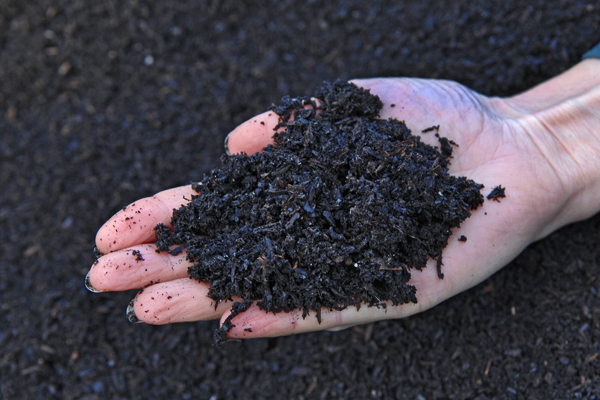
Biochar mixed with compost rich soil amendment

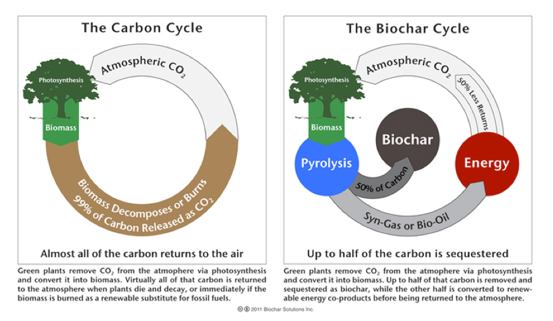
The carbon cycle connection.

When trees and crop residue decompose or burn, their carbon returns to the atmosphere within years. Converting that same material to biochar and incorporating it into soil moves that carbon onto a geological timescale — centuries to millennia. Biochar production and use prevents a large percentage of the CO₂ contained in the feedstock from returning to the atmosphere.

The IPCC, Project Drawdown, the Nature Conservancy, the US Natural Resources Conservation Service, and Lawrence Livermore National Lab have all identified biochar as one of the most important "natural climate solutions" available. Project Drawdown estimates that widespread adoption of biochar could reduce global emissions by 1.3 to 3 billion tonnes of CO₂e annually by 2050.

Carbon cycle diagram showing biochar carbon sequestration pathway

Sustainable production first.

SBI strongly believes that biochar should be made only from sustainably managed sources — critical from both an environmental and business perspective. When sourcing biomass from forest environments, great care must be taken to preserve and minimize damage to forest ecosystems. There is more than enough misdirected and poorly managed biomass to provide material for a healthy, sustainable biochar industry in the coming decades.

We also understand that biochar production is a regional activity — hauling biomass over long distances is not viable economically or environmentally. We support construction of regionally-located biomass-to-biochar conversion centers organized by "carbonsheds" that match appropriate feedstock sources to technology sizes based on site-specific conditions.

Explore our curated library of biochar research, books, webinars, and field reports.

Resources

Biochar White Papers, Reports, Blogs, and Studies

Here is an excellent technical report on biochar’s viability as a natural climate solution and its many other uses as well. Here is a link to a webinar sponsored by Dovetail Partners, IBI and USBI on Biochar in Viticulture that showcased our Oasis Vineyard Field Trial. SEC/DWR Oasis VIneyard Final Report Oasis Vineyard Quarterly Report_10_15_20 BiocharResearchProject_SPant_05-21-18  Forestry Usage of Biochar Literature Review, By Sophia Pant for SBI. Several years ago a Butte College student, Sophia Pant, did some great research for us on studies related to biochar and forestry, and related articles. Biomass Acquisition, Biomass Energy, and Biochar Production in California, By Raymond Baltar CAPCOA_Biomass_Policy How Biochar Works in Soil, by Kelpie Wilson Researchers discover high-def electron pathways in soil: http://www.news.cornell.edu/stories/2017/03/researchers-discover-high-def-electron-pathways-soi l Waste to Wisdom Final Reports. Utilizing Forest Residues for the Production of Bioenergy and Biobased Products Biochar increases vineyard productivity without affecting grape quality: Results from a four years field experiment in Tuscany. Vineyard_Italy_4-year-trial For a good series of biochar-related articles, visit the Pacific Biochar website’s Resources section. Kelpie Wilson’s Awesome Info-Filled Website: Presentations, videos, white papers

Biochar Related Blogs

  The Biochar Journal: An excellent journal by Kathleen Draper and others Biochar Today: Provides the latest industry news and scientific research related to biochar, including advancements in soil remediation and agricultural applications. Biochar Life Bottom-Up Biochar Blog: Shares insights and practical advice on biochar usage, including step-by-step guides for incorporating biochar into gardening and farming practices. Albert Bates’ “The Great Change” Blog: Authored by Albert Bates, a prominent figure in the biochar community, this blog covers topics related to biochar, climate change, and sustainable living.  

Songs About Biochar, the Environment, and Sonoma Ecology Center

  TED Talks on Biochar Biochar: The Oldest New Thing You’ve Never Heard Of: Wae Nelson at TEDxOrlando Biochar — Putting the carbon Genie back in the bottle: Rob Lerner at TEDxSanMiguelDeAllende (2013) TEDxHilo – Josiah Hunt – Biochar and the Future of Farming Lopa Brunjes – Biochar: An Ancient Solution to a Modern Problem TEDxBerkeley   With a little bit of heart, we can change the world — biochar | Elaine Doyle | TEDxTallaght: Biochar – the future of sustainable agriculture: Lauren Hale at TEDxUCR:  

Past Webinars, Conference Videos, and PowerPoints

Oct. 2020 SBI Scaling Biochar Forum Links to a large number of biochar presentations on the US Biochar Initiative Website To access videos and PowerPoints from 2012’s Biochar conference held here in Sonoma, GO HERE.

Videos & Documentaries

A curated collection of freely available professional videos, documentaries, TED talks, and recorded webinars about biochar — covering soil health, carbon sequestration, climate solutions, and production technology.

Documentaries

The Power of Biochar

Produced by Exomad Green & Carbonfuture · Directed by the filmmakers behind The 11th Hour and Ice on Fire · ~20 minutes · Free on YouTube

Beautifully shot short documentary following biochar production in the Amazon, weaving together science, indigenous wisdom, and climate action. Narrated by Sebastian Manhart.

Biochar for Farmers (Full Documentary)

Full documentary · January 2026 · Free on YouTube

An evidence-based look at what biochar actually does when applied to soil — testing it against real farm conditions rather than just lab results. A good balanced overview for agricultural audiences.

TED & TEDx Talks

All talks are free on YouTube.

  • Biochar: The Oldest New Thing You’ve Never Heard Of — Wae Nelson, TEDxOrlando

A compelling introduction to biochar’s history, science, and climate potential for general audiences.

youtube.com/watch?v=NrDOLx57KUU

  • Biochar — The Future of Sustainable Agriculture — Lauren Hale, TEDxUCR (UC Riverside)

An agricultural scientist presents the case for biochar as a tool for soil health and carbon sequestration in farming systems.

youtube.com/watch?v=AKBkgJoaIxQ

  • Biochar and the Future of Farming — Josiah Hunt, TEDxHilo

Josiah Hunt of Pacific Biochar presents on practical biochar farming applications and his experience as a biochar entrepreneur in Hawaii.

youtube.com/watch?v=SWbomZJn83U

  • Biochar: An Ancient Solution to a Modern Problem — Lopa Brunjes, TEDxBerkeley

A Bay Area perspective on biochar’s role in climate solutions, presented at UC Berkeley.

youtube.com/watch?v=ZroDAyIqW74

USDA & Government Resources

USDA Forest Service Biochar Webinar Series

Hosted by Dr. Carlos Rodriguez-Franco (USDA Forest Service) in partnership with the American Biochar Institute and Southern Regional Extension Forestry. Monthly webinars with archived recordings on a wide range of biochar topics.

Expanding Biochar Production Through USDA Forest Service Programs

Recorded at the 2025 North American Biochar Conference · Free on YouTube

Presented by USDA Forest Service researchers Brian Brashaw, Charlie Becker, and Kristen Bergstrand on how Forest Service programs are supporting biochar market development and production at scale.

North American Biochar Conference Recordings

The American Biochar Institute (ABI) has made dozens of recorded sessions from the 2025 North American Biochar Conference freely available on YouTube. Topics include:

  • Carbon credit markets and project finance
  • On-farm biochar demonstration trials
  • NRCS Conservation Practice Standard 336 implementation
  • Soil health and nitrogen cycling
  • Biochar-as-a-service business models
  • USDA Forest Service programs and funding
  • Scaling biochar production for the voluntary carbon market

Full session guide and YouTube links: biochar.org — 2025 NABC Recordings

Additional Videos/Movies

Ice on Fire: An HBO climate change documentary, produced and narrated by Leonardo DiCaprio and directed by Leila Connors (The 11th Hour), describes our current journey headlong into climate disaster but also also highlights a number of C02 drawdown strategies (including biochar production and use) that may help to blunt the worst effects of global warming. A presentation given by Dr. Goreau at Tufts University in 2014. A MUST-WATCH! COP20 report on the Arctic Methane Emergency. (Johannes Lehmann appears in the video at about the 23 minute mark) More info here. SeaChar / Estufa Finca biochar stove demonstration Ray Gallian of Sonoma Biochar Initiative explains Biochar Biochar/Agrichar/Terra Preta The promise of Biochar  / The promise of Biochar Part 2  On the Farm Biochar A product for the future: Dr. Johannes Lehmann Making Biochar: with Peter Hirst Rice Hull Biochar Trial Hangzhou, China 2007 Black Gold Agriculture Biochar in Costa Rica Making Biochar for Small Farms

Biochar Podcasts

Biochar-On-Site The Vineyard Team Podcast with Raymond Baltar: Conservation Burning and Biochar Production in Vineyard Settings

KRCB Radio Interviews on Biochar

KRCB Radio Interview with Peter Hirst KRCB Radio Interview with Ray Gallian

Biochar Organizations

International Biochar Initiative United States Biochar Coalition American Biochar Institute

North American Biochar Groups

Alaska Biochar Biochar Hawaii Central Illinois Biochar Group Pacific Northwest Biochar Initiative Rocky Mountain Biochar Initiative Seattle Biochar Working Group (SeaChar) South East Biochar Interest Group UBI Hawaii Commercial Production Technology Biogreen Energy, France Pyreg, Carbon Technology Solutions PyroCal, Continuous Carbonization Technology, Australia New England BiocharThere is an interesting project in Belize right now with 5 mobile drum kilns that are used at coffee plantations to produce biochar and then move as more trees are pruned, etc and the biochar is left onsite for agriculture. We did a story on their work recently which is available at: http://www.biochar-international.org/carbongold (and there is contact information for Simon Manley at the bottom of the story).

Books

Burn: Using Fire to Cool the Earth, by Albert Bates and Kathleen Draper The Biochar Solution: Carbon Farming and Climate Change (Sustainable Agriculture) by Albert K. Bates Biochar for Environmental Management: Science and Technology by Johannes Lehmann and Stephen Joseph The Biochar Debate: Charcoal’s Potential to Reverse Climate Change and Build Soil Fertility (Schumacher Briefings) by James Bruges Biochar-Ancient Agr Techique For 21st Century by Natan Snider The Biochar Revolution: Transforming Agriculture & Environment Edited by Paul Taylor PhD Ten Technologies to Save the Planet: Energy Options for a Low-Carbon Future by Chris Goodall BIOCHAR: A Cost Benefit Analysis in the Scottish Whisky Industry by Simon P. Messenger

Articles

Nature Magazine Online: Agriculture: State of the Art Soil Adam Retort Summary New Australian Agricultural Study of Biochar Biochar Farms Putting Biochar Policy on the Right Track Biochar in Viticulture—New Results NATURE STUDY;Sustainable biochar to mitigate global climate change http://www.nature.com/ncomms/journal/v1/n5/full/ncomms1053.html>
Questions about using biochar? Get in touch with our team.

● Active   2025 - Currently on Pause

ARTi Pyrolysis Unit — Napa Recycling & Compost Facility

After a four-year permitting journey with BAAQMD, our team received its Authority to Construct permit and, in November 2025, the final Permit to Operate (PTO) for our containerized ARTi pyrolysis unit at the Napa Recycling and Compost Facility in American Canyon. However, this PTO limits our sourcing of feedstock from just one company, A Plus Tree — a vestige of our previous CAL FIRE grant agreement — but this company can no longer supply what we need. So we have asked the BAAQMD to expand our allowed sourcing choices. This has taken over 3 months so far due to a change in wording we need from a USEPA Letter of Determination. So, while we have met all of the emissions and operational requirements for running the system, changing a few words in our permit has again stalled the restart of operations. We have confidence this will happen, and we WILL be making biochar soon — we will announce that here when we are up and running again.

SBI worked with collaborators Sitos, the US Biochar Coalition, and others to change a USEPA determination that had categorized clean cellulosic biomass as municipal solid waste requiring extensive monitoring. Under the revised determination, this material can now be used as a commercially acceptable feedstock for biochar and energy production — a major win for community-scale facilities.

ARTi pyrolysis unit ribbon cutting American Canyon Napa April 2025 ARTi containerized pyrolysis system at Napa Recycling
About ARTi Technology →
● Construction Complete   2024-2025

Green Schoolyards — 12 Schools in Pittsburg & Santa Rosa

In 2024, Sonoma Ecology Center received a CAL FIRE grant to manage planning for greening additions to 12 elementary schools - 4 in Santa Rosa and 8 in Pittsburg. Working with architects, landscape architects, and school communities, plans were developed to include 37 shade trees, outdoor classrooms, bioswale construction, asphalt removal, and biochar-enhanced soil treatments throughout.

In 2025, Sonoma Ecology Center was awarded implementation funding for Stoneman Elementary in Pittsburg, in partnership with the Pittsburg Unified School District. Construction completed in December 2025. Environmental education for 2nd-5th graders began in February 2026.

Stoneman Elementary Green Schoolyard construction Stoneman Elementary completed outdoor classroom Stoneman Elementary aerial view
● Results Released   2023-2025

Flame-Cap Kiln Emissions Study — USFS Fire Science Lab, Missoula

SBI, with the San Luis Obispo Air Pollution Control District, the USFS Fire Science Lab, The Usal Redwood Forest Company, and WSU scientist James Amonette, PhD, completed a landmark two-year emissions testing project comparing pollutants from flame-cap kilns, conservation burns, and standard burn piles. Results are presented in a webinar available online.

Flame-cap kiln emissions testing Missoula Conservation burn comparison testing Missoula USFS research team emissions testing
Webinar Announcement →
● 6th Harvest   2017 - Ongoing

Oasis Vineyard Biochar Trial — 6 Harvests of Positive Results

The long-running Oasis Vineyard field trial near King City, CA - originally funded by the California Department of Water Resources - is continuing to show positive results after the 6th harvest, monitored by Josiah Hunt of Pacific Biochar and the Monterey Pacific vineyard management company. This dataset has become one of the most robust biochar-in-viticulture records on the West Coast.

Oasis Vineyard biochar field trial King City California Read the 6th Harvest Report →

SBI is always looking for land managers, researchers, farmers, and funders interested in advancing biochar practice and science in California.

SBI's primary mission is to promote the ethical and sustainable production and use of biochar throughout California and beyond.

We educate a wide range of affected stakeholders in the advantages of biochar as a key tool in Sonoma County and California to achieve both effective climate policy and accelerated, sustainable agricultural productivity improvement. Biochar production and application holds great promise as a "fast mitigation technology" that, if utilized responsibly at scale, could decrease a significant percentage of atmospheric CO₂ while helping to build and maintain healthy soils.

In pursuit of these objectives, SBI actively promotes policies at local, state, and federal government levels to foster early adoption of biochar production and application through appropriate carbon valuation and funding; technology support; offset protocols; and clear pathways to address regulatory hurdles. SBI seeks to develop ongoing California biochar demonstration projects designed to show the usefulness and viability of this emerging technology.

Such projects include various components that together can link biochar production, GHG reduction, carbon sequestration, agricultural soil building and yield enhancement, water filtration, pollution mitigation, and energy cogeneration.
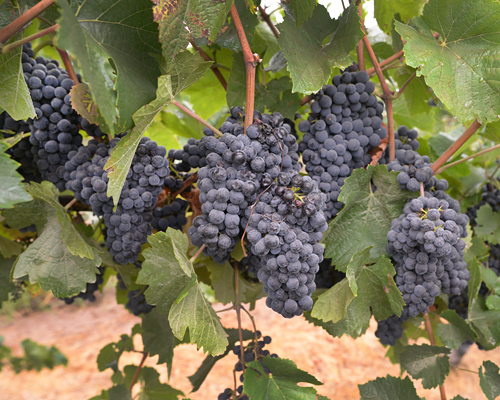
Sonoma Valley vineyards in fall California wine country biochar agriculture

SBI welcomes collaboration with organizations, agencies, researchers, and businesses advancing biochar in California and beyond.

Be part of the movement.

We are looking for people to join us who are passionate about making positive impacts in our world, who love collaborating and learning about how to make a difference on some of the most pressing issues of our day, and who want to help spread the word about biochar and its many positive attributes. We are action-oriented and want to spend our time doing, not just talking.

✉️
Sign up below
Newsletter keeps you current on biochar news, events, and opportunities.
💳
Become a member
Mail a check to Sonoma Ecology Center, P.O. Box 1486, Eldridge CA 95431. Write "SBI" in the notes.
🎓
Tax-deductible
SBI is a project of the Sonoma Ecology Center, a 501(c)3 non-profit.
📅
Attend meetings
We hold periodic community meetings, trainings, and biochar production events.

Membership

$25
Student / Senior
Student ID or age 65+ required. Includes digital newsletter and supporter listing.
$45
Individual
Full membership with newsletter, supporter listing, and website link.
$100
Business / Org
For businesses and organizations. Includes newsletter, listing, and website link.
$250
Biochar Visionary
Major supporter category. Prominent listing and recognition in SBI communications.

To become a member: mail a check made out to Sonoma Ecology Center to P.O. Box 1486, Eldridge, CA 95431. Please write "SBI" in the notes, and include your name, organization (if applicable), mailing address, email, phone, website (if you'd like a link), and membership category. Students please include a copy of your current student ID; seniors are age 65 and above.

We'd love to hear from you.

Raymond Baltar
Director — Main Organizational Contact
David Morell, PhD
SEC Board Member
Mailing Address
Sonoma Biochar Initiative c/o Sonoma Ecology Center P.O. Box 1486 Eldridge, CA 95431

Parent Organization

SBI is a project of the Sonoma Ecology Center →, a 501(c)3 nonprofit providing administrative and programmatic support since 2009.

Good reasons to reach out

🌲
You're a land manager or forester interested in biochar production from forest slash
🌾
You're a farmer or vineyard manager curious about biochar as a soil amendment
🏛️
You're a policy maker or agency representative exploring biochar-related programs
🔬
You're a researcher looking for collaboration or data sharing
🎓
You're an educator or student wanting to learn about biochar
📰
You're a journalist or media professional working on climate or agriculture stories
🤝
You're interested in becoming an organizational partner or supporter