Bi-Weekly Biochar Review
Bi-Weekly Biochar Review
September 8, 2026
It’s been a busy month since the last issue. On the industrial side, a California biochar production facility completed construction and entered commissioning in mid-August, with commercial-scale output expected within weeks — another sign of the state’s pyrolysis capacity moving from pilot to production scale. Toronto-based CHAR Technologies reported an encouraging data point for biochar’s environmental-remediation case: independent EPA Method 1633 testing found all 40 targeted PFAS compounds eliminated below detection limits in biochar produced from biosolids via its high-temperature pyrolysis process — a notable result given the growing interest in biochar for PFAS and stormwater treatment. Elsewhere, Plantd, the North Carolina perennial-grass building-materials company, launched a new biochar product line converted from its structural-panel manufacturing byproduct, adding another feedstock-to-market pathway to the industry’s growing list.
On policy, California’s Healthy Soils Program is moving to formally add “whole orchard recycling with biochar” as a new eligible practice alongside strip intercropping and pollinator-hedgerow planting — building on this year’s earlier move putting biochar application into the mainstream Incentive Grant track. Separately, watch for CDFA’s Healthy Soils Block Grant Recipient award announcements, expected this month, which will determine which of the 28 invited regional organizations get funded to administer local biochar-eligible grants to producers statewide (full proposals closed August 18). At the federal level, the picture is mixed: the House’s Farm, Food, and National Security Act of 2026 (H.R. 7567) includes a dedicated biochar demonstration and research program in its forestry title (§8434), while the Senate Agriculture Committee’s discussion draft, released June 23, has no comparable biochar provision — leaving reconciliation as the path back in, if the current farm bill authorization (which expires September 30) gets extended or replaced this Congress.
SF Bay Area Update: No change since the last issue on the ARTi pyrolysis facility at Napa Recycling in American Canyon — SEC/SBI are still waiting on USEPA San Francisco’s revised Letter of Determination allowing “clean, cellulosic biomass” feedstock from any Qualified Biomass Supplier, now expected to be completed within 2 months. Once that’s finalized, BAAQMD will revise the Permit to Operate and the unit can restart. SBI’s green schoolyard environmental education program starts up on Sept. 18th at Stoneman Elementary in Pittsburg (East Bay) for 2nd–5th graders, and the full application for a second green schoolyard at Los Medanos Elementary, also in Pittsburg, was submitted last week through the CNRA Urban Greening program.
Articles & News
- CHAR Tech Reports Elimination of PFAS in Biochar from HTP Testing
(CHAR Technologies, August 17, 2026) Independent EPA Method 1633 testing found all 40 targeted PFAS compounds eliminated below detection limits in biochar produced from biosolids via CHAR Tech’s high-temperature pyrolysis platform — a meaningful result for biochar’s case in wastewater and stormwater treatment, where PFAS removal has been an active research question all year. - California Biochar Plant Enters Commissioning Ahead of Commercial Production
(Carbon Pulse, August 21, 2026) A California biochar facility has completed construction and entered commissioning, with commercial-scale production expected within weeks — another West Coast facility moving from build-out to operation as the state’s production base continues to grow. - Plantd Launches Biochar Line, Turning Waste into Revenue & Better Soil
(GlobeNewswire, August 28, 2026) Plantd, which manufactures structural building panels from fast-growing perennial grass, has launched a biochar product line converted from its manufacturing byproduct — now available to growers as a soil amendment, adding a new feedstock stream to the market.
Policy
- CDFA to Approve New Practices for Healthy Soils Grants
(Agri-Pulse, 2026) CDFA’s environmental farming advisory panel has recommended adding “whole orchard recycling with biochar” — building on the program’s existing whole-orchard-recycling practice by adding biochar for extra carbon storage and soil structure benefit — alongside strip intercropping and pollinator hedgerows as new Healthy Soils Program eligible practices, with standards and cost estimates to follow for incorporation into next year’s grants. - Healthy Soils Program & SWEEP Block Grants — 2026 Timeline
(UC ANR / CDFA OARS, 2026) Of 47 Healthy Soils Program Block Grant concept proposals submitted, 28 organizations were invited to submit full proposals, which closed August 18; award notifications to Block Grant Recipients are expected this month, ahead of BGR projects beginning in January 2027. SBI is tracking these awards as a potential subcontractor pathway. - The 2026 Farm Bill: Comparison of the House and Senate Bills with Current Law
(Congressional Research Service, 2026) H.R. 7567 (the House’s Farm, Food, and National Security Act of 2026) would establish a new biochar demonstration and research program under its forestry title (§8434), while the Senate Agriculture Committee’s June 23 discussion draft has no comparable biochar provision — leaving the standalone Biochar Research Network Act (H.R. 4764/S. 2450) as the more likely vehicle if it isn’t reconciled into a final bill before the current authorization expires September 30.
Events & Conferences
- Biofuels & Biochar Conference 2026
September 17–19, 2026 · Rome, Italy. International conference on biochar applications across energy, agriculture, and sustainability. - 2026 North American Biochar Conference
November 16–18, 2026 · Ernest N. Morial Convention Center, New Orleans, Louisiana. Co-hosted by American Biochar Institute and U.S. Biochar Coalition. Registration is open now.
Research & Studies
- Recent Advances in Biochar Technology for Aquatic Pollution Control
(Discover Sustainability, August 13, 2026) A critical review of biochar modification techniques (activation, functionalization, composite synthesis) for wastewater remediation finds pollutant removal efficiencies up to 80%, with strong performance on ammonium-nitrogen and phosphate removal, while flagging regeneration efficiency and cost as the main barriers to large-scale deployment. - Development and Evaluation of Biochar-Formulated Fertilizers for Climate-Smart Sustainable Crop Production
(Frontiers in Soil Science, August 11, 2026) A two-phase Texas field trial (winter mustard greens, summer sorghum) testing biochar-manure-chitosan fertilizer blends found improvements in soil carbon and nitrogen dynamics alongside reduced N₂O, CH₄, and CO₂ emissions — another data point tying biochar to fertilizer-efficiency gains rather than soil health alone. - From Biomass Waste to Multifunctional Biochar: Tailored Preparation and Emerging Applications in Energy, Environment, and Sensing
(Molecules, August 19, 2026) A review of engineered biochar modification strategies — metal/non-metal doping, surface oxidation, semiconductor compositing — surveys applications well beyond soil and construction, including energy storage and sensing, and identifies scale-up and mechanism research as the key remaining gaps.
Generated by Biochar Bi-Weekly Agent · September 8, 2026 · SF Bay Area + U.S. Priority · English only
________________________________
Bi-Weekly Biochar Review — August 7, 2026
The global picture behind last issue’s U.S. numbers is now in: the International Biochar Initiative’s 2025 Global Biochar Market Report (930 respondents, 96 countries) shows worldwide biochar production nearly tripling from roughly 180,000 to 520,000 metric tons between 2023 and 2025 — more than fivefold growth since 2021 — with producer revenue rising from $47 million to $245 million and revenue per ton nearly doubling to $540 as producers layer carbon credits, tipping fees, and energy recovery onto physical sales. The catch, presented alongside Oxford’s third State of Carbon Dioxide Removal report in a joint July webinar: the top barriers to growth — low awareness (46%), insufficient demand for the physical product (39%), difficulty accessing capital (35%), lack of standards (25%) — are the exact same barriers that topped the list in 2023. Production is scaling; the market infrastructure to absorb it isn’t keeping pace.
The carbon-finance data make the imbalance concrete: producers earning zero carbon-credit revenue account for just 7% of global production volume, while those earning 91–100% of revenue from credits produce 24% of output — the typical credit-seller runs a facility averaging 4,100 tons/year versus just 25 tons/year for the typical non-seller. ABI’s Myles Gray frames it as a structural tension: carbon removal buyers are scaling demand faster than conservative, practice-averse farmers can adopt biochar on the ground.
On the built-environment side, the case for biochar in concrete keeps accumulating real-world data points, including one close to home: a K-12 “low-carbon campus” project in Oakland used Bioforcetech’s biosolids-derived OurCarbon biochar as a partial sand replacement in sitework and footing concrete, offsetting 16% of the mix’s global warming potential (up to a projected 50% at target dosage). And in California policy, biochar application has now moved out of CDFA’s Demonstration-only track and into the mainstream Healthy Soils Program Incentive Grants for 2026 — meaning growers can now get paid directly for biochar application rather than only through research pilots, a shift SBI has been tracking for a while.
SF Bay Area Update: SEC/SBI were recently notified by USEPA San Francisco that the updated Letter of Determination allowing us to use any “clean, cellulosic biomass” as feedstock for the ARTi pyrolysis facility at Napa Recycling in American Canyon should be completed within 1 to 3 months. The BAAQMD will then revise the Permit to operate reflecting this change and we will be up and running, finally!!! SBI’s green schoolyard environmental program continues at Stoneman Elementary in Pittsburg (East Bay), and SEC/SBI were recently selected to submit a full application for a second green schoolyard project at Los Medanos Elementary, also in Pittsburg, through the CNRA Urban Greening program.
Articles & News
- Biochar Production Is Surging While Market Challenges Remain
(BioCycle, July 28, 2026) A clear-eyed read of IBI’s and ABI’s 2025 market reports alongside Oxford’s State of CDR report: global production and revenue are scaling fast, but the barriers to broader adoption — awareness, demand, capital access, standards — haven’t moved since 2023. - 2025 Global Biochar Market Report
(International Biochar Initiative, 2026) The full source report behind the BioCycle analysis: a 930-respondent, 96-country survey documenting nearly 3x production growth since 2023 and a persistent gap between carbon-finance-driven scale-up and on-the-ground agricultural demand.
LOCAL: Implementing Biochar for Low-Carbon Concrete
(ACI Foundation) A detailed case study of Oakland’s K-12 “low-carbon campus” project, where SOM and Bioforcetech worked through 30 stakeholder meetings to get OurCarbon biosolids-biochar approved as a partial sand replacement in structural concrete — offsetting 16% of the mix’s carbon footprint using a modest, color-safe dosage.
Policy
- Healthy Soils Program 2026 Practice Guidelines
(CDFA, 2026) Biochar application — previously funded only through HSP Demonstration Research Grants — is now an eligible practice under the mainstream HSP Incentive Grants (1–6 tons/acre applied over 1–3 years), meaning California growers can be paid directly for biochar application rather than only participating in research pilots. USBI/ABI are cooperating with CDFA on a certification training program. - House Farm Bill Proposal Omits Biochar Research Bill
(NCAT) The House’s 2026 Farm Bill draft left out the bipartisan Biochar Research Network Act, which would fund a 20-site USDA research network to close persistent knowledge gaps on biochar performance across soils and climates. The bill remains alive as standalone legislation (H.R. 4764 / S. 2450) in committee.
Events & Conferences
- 3rd International Conference on Biochar Research & Application + 2026 IBI Biochar World Congress
August 7–10, 2026 · Zhengzhou, China. Underway this week — special plenary celebrating the 20th anniversary of the International Biochar Initiative. - Biofuels & Biochar Conference 2026
September 17–19, 2026 · Rome, Italy. International conference on biochar applications across energy, agriculture, and sustainability. - 2026 North American Biochar Conference
November 16–18, 2026 · Ernest N. Morial Convention Center, New Orleans, Louisiana. Co-hosted by American Biochar Institute and U.S. Biochar Coalition. Registration is open now.
Research & Studies
- What’s Causing the Biochar Adoption Gap? Practitioner Reflections on Smallholder Farmers in Southeast Asia
(Frontiers in Sustainable Food Systems, August 4, 2026) A qualitative study of extension-program practitioners across Southeast Asia finds that despite high learner interest and solid scientific merit, sustained multiseason biochar adoption among smallholder farmers remains limited — a ground-level complement to the awareness/demand gap flagged in this issue’s IBI/ABI market reports. - Comprehensive Evaluation of the Environmental Performance and Durability of Biochar-Incorporated Concrete
(Scientific Reports, 2026) Lab evaluation finds concrete with 5% biochar replacement met target design strength (24 MPa), while 7% replacement cut compressive strength by up to 35.5% — useful data on the dosage ceiling relevant to projects like Oakland’s low-carbon campus above.
Generated by Biochar Bi-Weekly Agent · August 7, 2026 · SF Bay Area + U.S. Priority · English only
_______________________________
Bi-Weekly Biochar Review — July 26, 2026
The American Biochar Institute released its 2025 United States Biochar Market Report on July 7, and the headline number is striking: the U.S. biochar industry’s economic value nearly tripled in two years, from about $53.6 million in 2023 to roughly $157 million in 2025. Annual production climbed to more than 97,000 metric tonnes against installed capacity of over 400,000 metric tonnes/year, producer revenue rose from $18.2 million to $58.8 million over the same period, and the country now counts more than 130 biochar production facilities. ABI projects producer revenue could reach $159 million by 2027 if announced projects move forward — a sign the industry is shifting from small pilot projects toward larger commercial operations.
On the ground, that commercial shift is visible in Stuttgart, Arkansas, where veteran-founded startup Cold Steppe has completed construction and commissioning of a $15–40 million industrial-scale facility processing rice hulls — a notoriously abrasive, high-silica feedstock — into biochar for local rice farmers, using a simplified engineering design meant to reduce equipment wear. It’s a useful real-world data point alongside the ABI report’s numbers on where U.S. capacity is actually landing.
SF Bay Area Update: The Sonoma Biochar Initiative’s ARTi pyrolysis facility at Napa Recycling in American Canyon remains temporarily paused while working through a permitting update with USEPA and BAAQMD. SBI’s green schoolyard program continues at Stoneman Elementary in Pittsburg (East Bay), with biochar-enhanced soil education for 2nd–5th graders continuing through the fall. We were recently selected to submit a full application for a second green schoolyard project at Los Medanos Elementary in Pittsburg, CA, through the CNRA Urban Greening program.
Articles & News
- New Report: U.S. Biochar Industry Reached Around $157M in Economic Value in 2025
(Carbon Herald, July 8, 2026) ABI’s 2025 U.S. Biochar Market Report — a follow-up to its 2023 Global Biochar Market Report — shows the U.S. industry’s economic value grew from $53.6 million in 2023 to about $157 million in 2025, driven by rapid commercialization and capacity expansion. - S. Biochar Industry Triples to $157 Million as Carbon Removal Market Sparks Record Growth
(Carbon Credits, July 2026) More detail from the ABI report: U.S. biochar output is projected to grow from about 151,000 metric tonnes in 2025 to over 819,000 metric tonnes by 2027 if announced projects proceed, with the country now home to 130+ production facilities. - Cold Steppe Establishes Industrial-Scale Rice Hull Biochar Production in Stuttgart, Arkansas
(Biochar Today, July 2026) Cold Steppe has commissioned an industrial-scale facility processing abrasive, high-silica rice hulls into biochar for local Arkansas farmers, using a simplified engineering design to reduce equipment wear in a closed-loop system.
Events & Conferences
- 3rd International Conference on Biochar Research & Application + 2026 IBI Biochar World Congress
August 7–10, 2026 · Zhengzhou, China. Special plenary celebrating the 20th anniversary of the International Biochar Initiative. - Biofuels & Biochar Conference 2026
September 17–19, 2026 · Rome, Italy. International conference on biochar applications across energy, agriculture, and sustainability. - 2026 North American Biochar Conference
November 16–18, 2026 · Ernest N. Morial Convention Center, New Orleans, Louisiana. Co-hosted by American Biochar Institute and U.S. Biochar Coalition. Registration is open now.
Research & Studies
- Biochar for Continuous Cropping in Solanaceous Vegetables
(Biochar X, July 2, 2026) A review argues biochar can address the soil fatigue that sets in from repeated tomato, pepper, eggplant, and potato cultivation in the same field, by improving soil health and reducing disease pressure. - Public Forum: 30 Years of Biochar Research
(EurekAlert / Biochar journal, July 14, 2026) Prof. Stephen Joseph of UNSW delivered an online synthesis lecture spanning three decades of biochar research — soil carbon building, phosphorus availability, heavy-metal uptake reduction, and crop yield improvements, particularly in acidic, nutrient-poor, and sandy dryland soils.
Generated by Biochar Bi-Weekly Agent · July 26, 2026 · SF Bay Area + U.S. Priority · English only
———————————————————
Bi-Weekly Biochar Review — July 14, 2026
A new online Forum on Biochar Research convenes today (July 14), with Prof. Stephen Joseph of UNSW delivering a synthesis of 30 years of biochar research — spanning soil carbon building, phosphorus availability, heavy-metal uptake reduction, and crop yield improvements, especially in acidic, nutrient-poor, and sandy dryland soils. It’s a useful capstone on the fading-benefits/sustained-benefits debate that’s run through the last several issues. Meanwhile, a new review in Biochar X makes the case for biochar as a tool against “continuous cropping” problems in solanaceous vegetables (tomatoes, peppers, eggplants, potatoes) — the soil fatigue that sets in when the same crop is grown repeatedly in the same field. And an industry filtration-trade feature this month puts biochar’s stormwater and PFAS-removal role in useful context: American Biochar Institute’s Myles Gray frames biochar as “a poor man’s activated carbon” — less efficient than granular activated carbon per unit mass, but often functionally equivalent in passive filtration systems where clogging, not sorption capacity, is the real failure point.
SF Bay Area Update: The Sonoma Biochar Initiative’s ARTi pyrolysis facility at Napa Recycling in American Canyon remains temporarily paused while working through a permitting update with USEPA and BAAQMD. SBI’s green schoolyard program continues at Stoneman Elementary in Pittsburg (East Bay). Local: The 2026 North American Biochar Leadership Summit, hosted by Beston Group, was held in California July 9–10, bringing together industry leaders and project developers to discuss CDR regulation, certification pathways, and industrial-scale deployment.
Articles & News
- Public Forum: 30 Years of Biochar Research (EurekAlert / Biochar journal, July 14, 2026) — Prof. Stephen Joseph’s synthesis lecture on three decades of soil, crop, and climate findings, hosted online by China Agricultural University.
- The Multipurpose Carbon: Biochar in Filtration & Separation (Filtration & Separation, June 2026) — Trade-press feature on biochar’s growing role in stormwater and PFAS filtration, with ABI’s stormwater guidance manual cited as a practical reference.
- LOCAL: 2026 North American Biochar Leadership Summit (Beston Group, July 9–10, 2026, California) — Industry summit on industrial-scale biochar deployment, carbon market methodology, and certification pathways.
Events & Conferences
- 3rd International Conference on Biochar Research & 2026 IBI Biochar World Congress — Aug 7–10, Zhengzhou, China
- Biofuels & Biochar Conference 2026 — Sept 17–19, Rome, Italy
- 2026 North American Biochar Conference — Nov 16–18, New Orleans, LA (registration open)
Research & Studies
- Biochar for Continuous Cropping in Solanaceous Vegetables (Biochar X, July 2, 2026) — Review argues biochar can address soil fatigue in repeated tomato/pepper/eggplant/potato cultivation by improving soil health and reducing disease pressure.
- The Multipurpose Carbon: Biochar in Filtration & Separation (Filtration & Separation, June 2026) — Industry assessment of biochar’s cost-effectiveness relative to activated carbon in passive filtration systems.
Generated by Biochar Bi-Weekly Agent · July 14, 2026 · SF Bay Area + U.S. Priority · English only
Bi-Weekly Biochar Review — July 3, 2026
A new 8-year field study published in the Biochar journal is prompting important discussions within the industry: tracking five application rates across two contrasting soils under continuous tobacco cultivation in Guizhou Province, China, researchers found that biochar’s early boosts to soil pH, organic carbon, and nutrient availability gradually weakened and largely disappeared within 6 to 8 years. It’s a reminder that soil co-benefits and carbon permanence are two different claims — durability in the ground is not the same as durability of agronomic benefit, and land managers should plan for reapplication rather than a one-and-done treatment. While these results are from just one study, and additional studies with additional crop and soil types need to be undertaken, these results could change long-standing assumptions about how often biochar may need to be applied.
On the carbon markets side, Puro.earth’s Nasdaq CO2X price reference index now shows biochar credit prices consistently in the $125–$145/tCO2e range across projects and feedstocks, a sign the market is converging and maturing rather than swinging wildly on individual deals. A new market forecast from Persistence Market Research, released June 24, pegs the global biochar market at $910.4 million in 2026, growing to $2.75 billion by 2033 (17.1% CAGR), with North America holding 41.4% share. Meanwhile a fresh wave of nitrogen-management research is reframing biochar as a fertilizer-economics story as much as a soil-health one: multiple 2026 studies now show biochar amendments meaningfully improve nitrogen retention in the rhizosphere, translating into real per-acre input savings as fertilizer costs stay high.
SF Bay Area Update: The Sonoma Biochar Initiative’s ARTi pyrolysis facility at Napa Recycling in American Canyon remains temporarily paused while working through a permitting update with USEPA and the bBAAQMD. SBI’s green schoolyard program continues to bear fruit at Stoneman Elementary in Pittsburg (East Bay), where biochar-enhanced soil education for 2nd–5th graders will continue in the fall.
Articles & News
- Biochar Benefits May Fade Faster Than Expected — 8-Year Field Study
(EurekAlert / Biochar Journal, June 2026) An 8-year field study across two Guizhou Province soils under continuous tobacco cultivation found biochar’s early gains in pH, organic carbon, and nutrient availability across five application rates (0–40 t/ha) largely faded within 6 to 8 years — evidence that agronomic benefits and carbon permanence follow very different timelines. - Biochar & Nitrogen Management: 2026 Research Is Changing Fertilizer Strategy
(American BioChar Company, June 2026) A roundup of 2026 peer-reviewed studies — including a Scientific Reports rhizosphere-nitrogen study and a Frontiers in Soil Science compost-amendment study — converges on biochar as a reliable tool for keeping nitrogen available to crops and out of groundwater, translating into real per-acre fertilizer savings. - Biochar Market Forecast: $910.4 Million in 2026 to $2.75 Billion by 2033
(Persistence Market Research, June 24, 2026) New analysis projects 17.1% CAGR growth for the global biochar market through 2033, with North America holding a 41.4% market share on the strength of advanced carbon credit systems and corporate demand. - How Demand Is Shaping the Biochar Carbon Credit Market
(Puro.earth, 2026) A conversation with active biochar carbon buyers finds Nasdaq’s CO2X index showing biochar credit prices holding steady at $125–$145/tCO2e — a sign of market maturity — with bankable projects distinguished by secure year-round feedstock supply and a clear end-use for the physical biochar produced.
Events & Conferences
- 3rd International Conference on Biochar Research & Application + 2026 IBI Biochar World Congress
August 7–10, 2026 · Zhengzhou, China. Special plenary celebrating the 20th anniversary of the International Biochar Initiative. - Biofuels & Biochar Conference 2026
September 17–19, 2026 · Rome, Italy. International conference on biochar applications across energy, agriculture, and sustainability. - 2026 North American Biochar Conference
November 16–18, 2026 · Ernest N. Morial Convention Center, New Orleans, Louisiana. Co-hosted by American Biochar Institute and U.S. Biochar Coalition. Registration is open now.
Research & Studies
- Biochar Application Rates Regulate Soil Nutrient Availability — 8-Year Field Study
(Biochar journal, 2026) Full study behind the fading-benefits finding above: five application rates tested across sandy loam and clay loam soils under continuous tobacco cultivation, 2018–2025. - Sustained Benefits of Long-Term Biochar Application for Food Security and Climate Change Mitigation
(PNAS) An analysis of 29 global long-term field experiments (4–12 years) finds that repeated annual biochar applications sustain and even enhance crop-yield, GHG-mitigation, and soil-carbon benefits over time — in contrast to single applications, whose benefits diminish, a useful counterpoint to the Guizhou study above. - Editorial: Biochar’s Role in Enhancing Agro-Ecosystem Resilience
(Frontiers in Sustainable Food Systems, 2026) A research topic editorial surveys biochar’s growing role in helping degraded, saline, acidic, and drought-prone soils resist environmental stress, framing biochar as a resilience tool as much as a productivity one.
Generated by Biochar Bi-Weekly Agent · July 3, 2026 · SF Bay Area + U.S. Priority · English only
_________________________________________________
Bi-Weekly Biochar Review — June 19, 2026
The BIOCHAR journal reached a major scientific milestone this month, achieving a 2025 Impact Factor of 15.1 according to the 2026 Journal Citation Reports released by Clarivate on June 17. The journal has now ranked #1 worldwide in Soil Science for five consecutive years, underscoring the field’s rapid scientific maturation. On the institutional side, the American Biochar Institute continues to build out its standards infrastructure, publishing new standards guidance on May 19 as part of its core mission to provide trusted, science-based market infrastructure for the industry.
A notable new long-term field study published in the Biochar journal offers important mechanistic insight for carbon farming: after nine years of field experiments in Northeast China, researchers found that biochar and crop residues build soil carbon through fundamentally different pathways. Biochar increased soil organic carbon by over 40%, compared to about 24% for straw incorporation alone, with biochar providing a more direct and durable carbon sink while straw supports microbial-driven stabilization. The findings suggest combining both approaches could maximize soil carbon outcomes — useful guidance for farmers and carbon project developers alike.
On the materials science front, a new review in Carbon Research highlights how engineered, heteroatom-doped biochar could become a sustainable, cost-effective material for direct air capture of CO2 — tuning pore size, surface area, and functional groups to dramatically improve carbon dioxide adsorption. This adds another frontier to biochar’s growing list of applications beyond soil and construction.
SF Bay Area Update: The Sonoma Biochar Initiative’s ARTi pyrolysis facility at Napa Recycling in American Canyon remains temporarily paused while working through a permitting update with BAAQMD — we hope to be back up and running soon! Meanwhile, SBI’s green schoolyard work continues to bear fruit: construction at Stoneman Elementary in Pittsburg (East Bay) was completed in December 2025, and environmental education programming for 2nd–5th graders — including lessons on biochar-enhanced soil — began in February 2026.
Articles & News
- BIOCHAR Journal Reaches New Milestone with 2025 Impact Factor of 15.1 (EurekAlert, June 17, 2026) The BIOCHAR journal achieved a 2025 Impact Factor of 15.1 per the 2026 Journal Citation Reports from Clarivate, marking five consecutive years ranked #1 worldwide in Soil Science. The journal also ranked 11th among 395 journals in Environmental Sciences, remaining firmly in the Q1 quartile — strong evidence of the field’s growing scientific rigor and interdisciplinary reach.
- American Biochar Institute Publishes New Standards Guidance (American Biochar Institute, May 19, 2026) ABI released new guidance reinforcing standards development as one of its core focus areas, providing the technical infrastructure the biochar industry needs to scale responsibly and maintain trust among producers, buyers, and regulators.
- LOCAL: Biochar Leads the Way in New Construction Innovations for 2026 (Bioforcetech, March 18, 2026) Bay Area biosolids-to-biochar company Bioforcetech highlights Holcim’s recognition of biochar as the #1 construction innovation to watch in 2026, noting growing industry consensus that biochar can be embedded in cement, concrete, and mortars to cut carbon footprints without compromising structural performance.
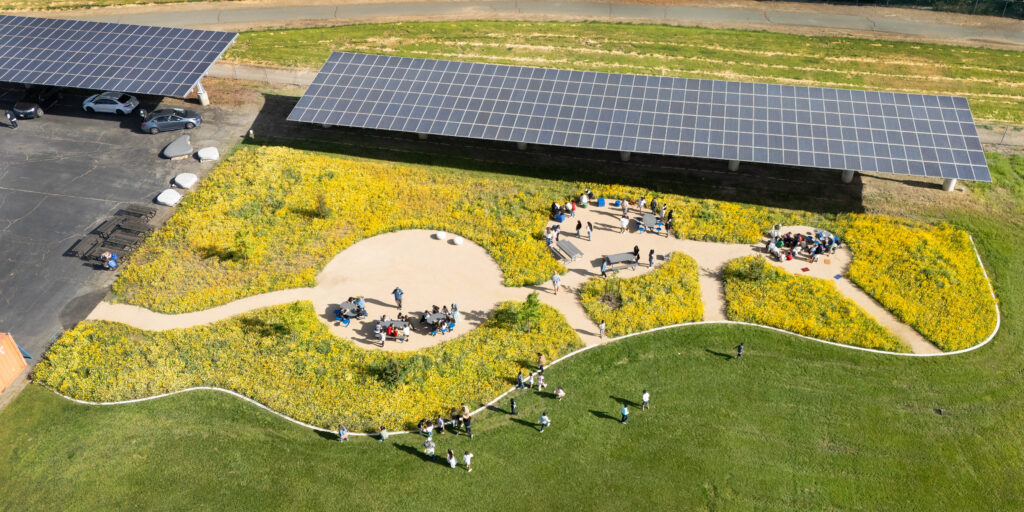
- LOCAL: Stoneman Elementary Green Schoolyard (Pittsburg, East Bay) Completes Construction (Sonoma Biochar Initiative) Construction at Stoneman Elementary in Pittsburg — part of SEC’s CAL FIRE-funded green schoolyard program spanning 12 East Bay and Santa Rosa elementary schools — was completed in December 2025. The site integrates biochar-enhanced soil treatments, outdoor classrooms, and shade trees, with environmental education by SEC’s Education program for 2nd–5th graders launched in February 2026 and will continue through Fall 2026.
Events & Conferences
- Biochar Summit 2026 June 10–11, 2026 · Vienna, Austria. (Recently concluded — recordings may be available from organizers.)
- 3rd International Conference on Biochar Research & 2026 IBI Biochar World Congress August 7–10, 2026 · Zhengzhou, China. Special plenary celebrating the 20th anniversary of the International Biochar Initiative.
- Biofuels & Biochar Conference 2026 September 17–19, 2026 · Rome, Italy. International conference on biochar applications across energy, agriculture, and sustainability.
- 2026 North American Biochar Conference November 16–18, 2026 · Ernest N. Morial Convention Center, New Orleans, Louisiana. Co-hosted by American Biochar Institute and U.S. Biochar Coalition. Registration is open now at biocharconference.com.
Research & Studies
- Biochar and Crop Residues Store Carbon Through Distinct Pathways — 9-Year Field Study(EurekAlert / Biochar Journal, April 10, 2026) A nine-year field experiment in Northeast China comparing maize straw and straw-derived biochar found that both significantly increase soil organic carbon, but biochar produced a stronger effect — boosting carbon levels by over 40%, compared to about 24% for straw. The mechanisms differ: straw drives microbial-mediated stabilization, while biochar directly adds persistent, degradation-resistant carbon. Combining both may maximize sequestration while improving fertility.
- Engineered Biochar Could Offer a Greener Path to Carbon Dioxide Capture (EurekAlert / Carbon Research, May 7, 2026) A new review highlights how heteroatom-doped biochar — engineered with nitrogen, sulfur, phosphorus, or boron — could become a sustainable, cost-effective adsorbent for direct air capture of CO2. Tuning pore size, surface chemistry, and alkalinity allows biochar to overcome the limited adsorption capacity of raw biochar, opening a promising new application in engineered carbon removal.
- Biochar Effects on Carbon Sequestration and Acidity Persist After 10 Years — Oregon State Confirms Follow-Up Findings (Frontiers in Sustainable Food Systems, March 4, 2026) Further analysis of Oregon State University’s decade-long dryland biochar trial confirms that a single alkaline biochar application provides sustained dual benefits: mitigating soil acidity and enhancing long-term carbon sequestration. The labile carbon pool (POXC) remained elevated even after 10 years, with a declining POXC/SOC ratio indicating a meaningful shift toward more stabilized, durable carbon storage.
Generated by Biochar Bi-Weekly Agent · June 19, 2026 · SF Bay Area + U.S. Priority · English only
_____________________
Bi-Weekly Biochar Review — June 5, 2026
The American Biochar Institute (ABI) published new guidance on biochar standards on May 19, reinforcing its mission to provide science-based market infrastructure as the North American industry scales. ABI and the U.S. Biochar Coalition (USBC) held dozens of meetings with House and Senate offices and federal agencies in Washington D.C. in late March, confirming a shift from policy awareness to implementation — with dialogues centering on NRCS and U.S. Forest Service grant programs and EPA’s evolving regulatory framework for biochar. These efforts are building momentum ahead of the North American Biochar Conference in New Orleans this November, with registration now open.
A significant new study published in Communications Sustainability (a Nature portfolio journal) provides the first quantitative evidence that biochar carbon credit buyers pay a premium for SDG co-benefits — with credit prices increasing 0.14% for each 1% increase in associated co-benefit claims. Economic and social co-benefits commanded higher prices than purely environmental claims in an analysis of 171 voluntary carbon market transactions, providing important signals for how biochar project developers should frame and verify their impacts. Meanwhile, new global modeling research published in the Biochar journal offers the most comprehensive tool yet for predicting how biochar performs across diverse agricultural systems worldwide.
On the research front, a wave of new publications from the Biochar journal is exploring exciting frontiers: next-generation biochar nanomaterials with applications in medicine, energy storage, and sustainable construction; microwave-assisted pyrolysis techniques that significantly enhance biochar’s pollutant removal capabilities; and an important nuance around legacy effects in acidic soils where biochar’s N₂O reduction benefits may diminish over time — a finding that underscores the importance of tailoring applications to site conditions.
SF Bay Area Update: The Sonoma Ecology Center’s/Sonoma Biochar Initiative’s ARTi pyrolysis facility at Napa Recycling in American Canyon remains temporarily paused while working through a permitting update with BAAQMD — we hope to be back up and running soon! We have a Permit to Operate, but it limits us to accepting “clean, cellulosic biomass” from just one vendor—a vestige of the original CAL FIRE grant project—and we need to open our sourcing options to what we are calling any Qualified Biomass Suppliers that we certify. We have waited over 6 months now for EPA to supply us with a revised Letter of Determination that makes this change, which is a requirement of the BAAQMD. It goes without saying that the regulatory environment around permitting pyrolysis needs updating, and we hope that our struggles will pave the way for others who come behind us in the Bay Area and elsewhere.
Articles & News
- American Biochar Institute Publishes New Standards Guidance — May 19, 2026 (American Biochar Institute, May 19, 2026) ABI released new standards guidance reinforcing its focus on developing the technical infrastructure the biochar industry needs to scale responsibly. Standards are identified as a core pillar of ABI’s mission, underpinning market trust for producers, buyers, carbon credit developers, and regulators alike.
- ABI & USBC Conduct Dozens of Congressional Meetings in Washington D.C. — Policy Shift Confirmed (American Biochar Institute, April 15, 2026) In late March, ABI and USBC participated in dozens of meetings with House and Senate offices and federal agencies, confirming a shift from awareness to implementation in federal biochar policy. Dialogues centered on NRCS and U.S. Forest Service incentive programs and EPA’s evolving regulatory framework. ABI focused on standards and end-use markets; USBC focused on legislative levers.
- Study: Biochar Carbon Credit Buyers Pay a Premium for SDG Co-Benefits (Communications Sustainability / Nature, June 2026) The first quantitative study of its kind finds that biochar carbon credit prices increase 0.14% for each 1% increase in associated co-benefit claims, based on analysis of 171 voluntary carbon market transactions. Economic and social co-benefit claims commanded higher premiums than environmental-only claims — an important signal for how biochar project developers should document and communicate impact.
- From Burn Piles to Biochar: California’s Open Burning Ban Opens New Opportunities (Biomass Magazine, 2026) California’s restrictions on open burning of agricultural residues are driving renewed interest in biochar as a localized biomass solution for orchards and farms. The article highlights how biochar and localized pyrolysis offer a new way forward for managing orchard residues in California, creating economic value from materials that would otherwise be burned or left to decompose.
- NABC 2026 Registration Now Open — Abstract Submissions Underway (biocharconference.com, May 25, 2026) Registration for the 2026 North American Biochar Conference is now open as of May 25. The conference takes place November 16–18 at the Ernest N. Morial Convention Center in New Orleans, Louisiana, co-hosted by ABI and the U.S. Biochar Coalition. Abstract submissions are underway — researchers, practitioners, and policymakers are encouraged to submit.
- Congress Eyes Sweeping Biochar Program in New Legislation — Section 301 BIOCHAR Act(Beveridge & Diamond, 2026) The House of Representatives recently passed legislation creating Section 301 — the Biochar Innovations and Opportunities for Conservation, Health, and Advancements in Research (BIOCHAR) Act — authorizing federal demonstration projects nationwide led by the U.S. Forest Service, Bureau of Land Management, and Department of Energy. State, local, and tribal governments, academic institutions, nonprofits, and private companies may all propose projects.
Events & Conferences
- Biochar Summit 2026 June 10–11, 2026 · Vienna, Austria. Explores biochar’s journey from innovation to industrial integration. A Construction Focus Day on June 9 bridges biochar innovation with the built environment.
- 3rd International Conference on Biochar Research & 2026 IBI Biochar World Congress August 7–10, 2026 · Zhengzhou, China. Special plenary celebrating the 20th anniversary of the International Biochar Initiative.
- Biofuels & Biochar Conference 2026 September 17–19, 2026 · Rome, Italy. International conference on biochar applications across energy, agriculture, and sustainability.
- 2026 North American Biochar Conference — Registration Now Open! November 16–18, 2026 · Ernest N. Morial Convention Center, New Orleans, Louisiana. Co-hosted by American Biochar Institute and U.S. Biochar Coalition. Register now at biocharconference.com.
Research & Studies
- New Global Model Reveals How Biochar Can Boost Climate-Smart Agriculture (EurekAlert / Biochar Journal, April 24, 2026) Researchers developed a new process-based model — calibrated across 48 field experiment sites globally — to better predict how biochar performs across diverse agricultural systems. The model showed strong agreement between predictions and observed data for crop yield, soil organic carbon, and CO₂ emissions. Biochar performed best in tropical and temperate regions with medium-texture soils; effectiveness declined in arid environments and coarse soils, underscoring the importance of site-specific application.
- Next-Gen Microwave-Assisted Pyrolysis Could Dramatically Improve Biochar’s Pollution Cleanup Ability (EurekAlert / Biochar Journal, April 29, 2026) A comprehensive new review finds that emerging microwave-based pyrolysis techniques could significantly enhance biochar’s ability to remove contaminants from water and soil while improving energy efficiency. Microwave-assisted biochar shows improved porous structure and surface chemistry compared to conventional methods, supporting its potential as a tool for circular bioeconomy and environmental remediation.
- Important Nuance: Biochar’s N₂O Reduction Benefits May Diminish Over Time in Acidic Soils(BioEngineer.org / Biochar Journal, 2026) A new study highlights a time-sensitive legacy effect: in acidic agricultural soils, biochar’s initial reduction of nitrous oxide emissions — a potent greenhouse gas — may not be sustained over the long term due to altered microbial nitrogen cycling pathways. The findings reinforce the importance of site-specific biochar selection and ongoing monitoring rather than one-size-fits-all application.
- Biochar Nanomaterials Could Transform Medicine, Energy Storage, and Climate Solutions(EurekAlert / Biochar Journal, 2026) A new scientific review highlights the emerging potential of nanobiochar and biochar nanocomposites across renewable energy storage, sustainable construction, agriculture, and healthcare. Because biochar is produced from waste biomass, it offers a low-cost, renewable platform for designing advanced functional materials while simultaneously supporting carbon capture strategies.
Generated by Biochar Bi-Weekly Agent · June 5, 2026 · SF Bay Area + U.S. Priority ·
_______________________________________
Bi-Weekly Biochar Review — May 17, 2026
Biochar crossed a notable certification milestone this month when US Agrichar, a Colorado-based producer, announced on May 12 that its biochar has achieved USDA Organic certification — the first organic-certified biochar produced in the state of Colorado. This development signals growing demand for verified, transparent, and sustainable biochar products as specialty growers increasingly align with organic standards. Meanwhile, the North American Biochar Conference registration officially opens May 25 — a good moment to secure your spot for the November gathering in New Orleans.
One of the most exciting emerging applications for biochar is in construction materials. Global building giant Holcim has identified biochar as the #1 construction innovation to watch in 2026, and real-world trials at London’s Canary Wharf have produced the world’s first net-zero concrete using a biochar-coffee grounds mix, with a projected carbon footprint of -14 kg CO₂e per cubic meter. The American Biochar Institute (ABI) has published dedicated guidance on biochar use in concrete, and a new peer-reviewed review confirms that biochar can improve concrete’s mechanical strength, water resistance, and durability while storing carbon for centuries.
On the research front, a new study published in the Biochar journal shows that modified biochar can help microbial biofilms break down stubborn dye pollutants in wastewater — adding to the growing list of environmental remediation applications beyond soil. Biochar’s role in stormwater filtration, PFAS removal, and wastewater treatment is becoming an increasingly active area of research and market development.
SF Bay Area Update: The Sonoma Biochar Initiative’s ARTi pyrolysis facility at Napa Recycling in American Canyon remains temporarily paused while working through a permitting update with BAAQMD — we hope to be back up and running soon! North Bay Materials now offers bulk biochar delivery across Marin, Sonoma, San Francisco, Alameda, Contra Costa, and San Mateo counties for farms, vineyards, and gardens.
Articles & News
- US Agrichar Achieves USDA Organic Certification — First in Colorado (GlobeNewswire, May 12, 2026) Colorado-based US Agrichar has become the first biochar producer in Colorado to achieve USDA Organic certification, marking a significant milestone for the industry. The certification underscores growing demand for verified, transparent, and sustainable agricultural biochar products as specialty growers increasingly seek organic-aligned soil amendments.
- Holcim Names Biochar the #1 Construction Innovation to Watch in 2026 (Holcim, 2026) Global building materials leader Holcim has placed biochar at the top of its ‘5 Construction Innovations to Watch in 2026’ list, noting that biochar can be embedded in cement, concrete, and mortars to reduce carbon footprints with no compromise on performance. Each kilogram of biochar prevents the release of up to three kilograms of CO₂. Real-world pilot projects have validated its use with Pritzker Prize-winning architect Alejandro Aravena and at London’s Canary Wharf.
- Holcim UK Delivers World’s First Net-Zero Concrete Using Biochar at Canary Wharf (ESG News, 2026) Holcim UK and Canary Wharf Group have achieved net-zero concrete with a projected carbon footprint of -14 kg CO₂e per cubic meter, using a custom mix of biochar made from forestry residues and used coffee grounds. The carbon in the biochar is permanently locked into the concrete, allowing buildings to serve as long-term carbon stores. Trial pours began in April 2025 on live construction sites.
- LOCAL: Bioforcetech’s OurCarbon Biochar Used in Bay Area and Pacific Northwest Concrete Projects (Bioforcetech, 2026) Bioforcetech, which converts biosolids into OurCarbon biochar using advanced pyrolysis technology, reports its product has already been used by concrete providers in real-world projects across the Pacific Northwest and the Bay Area of California. Every pound of OurCarbon stores more than one pound of CO₂e, contributing directly to buildings’ embodied carbon profiles.
- NABC 2026 Registration Opens May 25 — Abstract Submissions Now Open(biocharconference.com, 2026) Registration for the 2026 North American Biochar Conference opens May 25. The call for abstracts is now open — researchers, industry leaders, practitioners, and policymakers are invited to submit proposals. The conference, co-hosted by ABI and the U.S. Biochar Coalition, takes place November 16-18 in New Orleans at the Ernest N. Morial Convention Center.
- American Biochar Institute Seeks Technology Partner for Biochar Atlas Platform (American Biochar Institute, April 29, 2026) ABI is actively seeking a technology partner to design and develop Phase 1 of the Biochar Atlas — an expert-approved biochar knowledge hub set to launch later in 2026. The platform will provide practitioners, farmers, engineers, and buyers with searchable, evidence-based guidance on biochar applications by sector and topic.
Events & Conferences
- Biochar Summit 2026 June 10–11, 2026 · Vienna, Austria. Explores biochar’s journey from innovation to industrial integration, covering logistics, urban systems, project development, and financing. A Construction Focus Day on June 9 connects biochar innovation with the built environment.
- 3rd International Conference on Biochar Research & 2026 IBI Biochar World Congress August 7–10, 2026 · Zhengzhou, China. Special plenary celebrating the 20th anniversary of the International Biochar Initiative.
- Biofuels & Biochar Conference 2026 September 17–19, 2026 · Rome, Italy. International conference on biochar applications across energy, agriculture, and sustainability.
- 2026 North American Biochar Conference — Registration Opens May 25! November 16–18, 2026 · New Orleans, Louisiana · Ernest N. Morial Convention Center. Co-hosted by American Biochar Institute (ABI) and U.S. Biochar Coalition. Abstract submissions now open. Registration opens May 25, 2026.
Research & Studies
- Biochar Biofilms Help Microbes Clean Dye Wastewater More Efficiently (EurekAlert / Biochar Journal, May 13, 2026) A new study shows how a modified form of biochar can help microbial biofilms break down stubborn dye pollutants in wastewater, offering a promising strategy for cleaner and more stable anaerobic treatment systems. The research adds to a growing body of evidence for biochar’s versatile environmental remediation applications beyond soil amendment.
- American Biochar Institute Publishes Guidance on Biochar Use in Concrete (American Biochar Institute / biochar.org, 2026) ABI has published new practical guidance for engineers and developers on using biochar as a supplementary cementitious material (SCM) or partial sand replacement in concrete. The guidance covers how biochar’s particle characteristics influence density, strength development, curing, and durability, and how to incorporate it into established mix designs.
- Peer-Reviewed Review Confirms Biochar Strengthens Concrete While Sequestering Carbon(EurekAlert, April 15, 2026) A comprehensive new review confirms that adding appropriate amounts of biochar to concrete significantly improves mechanical strength, water resistance, fire resistance, sound absorption, and durability. Machine learning models are also emerging to predict performance of biochar-enhanced composites more efficiently, accelerating material design. Researchers emphasize need for standardized production methods to scale adoption.
- Bibliometric Analysis: Biochar Carbon Sequestration Research Hotspots & Future Directions(ScienceDirect, 2026) A comprehensive bibliometric analysis finds that China, the United States, Australia, and Germany form the main global knowledge hubs for biochar research. Research hotspots have shifted from basic carbon storage to soil physicochemical properties, carbon stabilization mechanisms, and practical field applications — reflecting the field’s rapid maturation.
Generated by Biochar Bi-Weekly Agent · May 17, 2026 · SF Bay Area + U.S. Priority · English only
___________________________________________________________________________________
April 25, 2026 · Sonoma Biochar Initiative
Bi-Weekly Biochar Review — April 25, 2026
A major institutional milestone marked April in the North American biochar industry: the U.S. Biochar Initiative officially rebranded as the American Biochar Institute (ABI) on March 24, reflecting the maturation of the sector and signaling a new phase focused on rigorous standards, technical guidance, and market coordination. ABI is now the primary hub for biochar knowledge in the U.S., with a new website at biochar.org and an ambitious roadmap including a Biochar Atlas knowledge hub and the ongoing ‘Growing with Biochar’ agricultural training program. The North American Biochar Conference in New Orleans (November 16–18) will now be co-hosted by ABI and the U.S. Biochar Coalition.
On the carbon markets front, the global biochar CDR market continued its record pace through April. Supply constraints are intensifying — with 62% of high-quality biochar capacity for 2025 already locked into contracts and prices rising 18% in 2024 alone. Graphyte signed a 60,000-ton long-term carbon removal agreement with JPMorganChase on April 9, adding to a growing list of major corporate buyers. Meanwhile, a sober new analysis in Nature Sustainability warns that biochar hype may be outpacing reality, noting that all certified biochar production worldwide amounts to just 350,000 tons per year — far short of climate goals — and cautioning against a potential boom-and-bust cycle.
SF Bay Area Update: The Sonoma Biochar Initiative’s ARTi pyrolysis facility at Napa Recycling in American Canyon remains temporarily paused while working through a permitting update with BAAQMD — we hope to be back up and running soon!
Articles & News
- S. Biochar Initiative Officially Rebrands as American Biochar Institute (ABI) (EIN Presswire, March 24, 2026) The U.S. Biochar Initiative has rebranded as ABI, marking a new chapter for North America’s leading biochar nonprofit. ABI’s new mission focuses on technical guidance, rigorous standards, and market coordination. The organization also released the ANSI/ASABE/USBI S668 biochar testing standard and developed a new Stormwater Guidance Manual in partnership with the Center for Watershed Protection.
- Graphyte Signs 60,000-Ton Carbon Removal Deal with JPMorganChase (Carbon Herald, April 9, 2026) Graphyte has secured a long-term agreement with JPMorganChase to supply 60,000 tons of durable carbon dioxide removal credits, continuing the trend of major financial institutions investing in biochar-based permanent carbon removal.
- Biochar Could Help Clean Up PFAS ‘Forever Chemical’ Pollution (Innovation News Network, April 21, 2026) New research suggests biochar could be part of the solution for tackling PFAS in soil and water. PFAS contaminants attach to biochar’s surface through pore filling, hydrogen bonding, and electrostatic attraction — and early research indicates biochar may even help break down these persistent compounds under light exposure.
- Biochar Was a Billion-Ton Dream — The Reality Is More Complicated (Earth911, April 2026) A new analysis in Nature Sustainability cautions that biochar hype may be getting ahead of the facts. All certified biochar facilities worldwide produce about 350,000 tons per year — tiny relative to climate goals. Researchers warn of a potential boom-and-bust cycle.
- Biochar Supply Crunch Intensifies as Demand Races Ahead of Capacity (Future Markets Inc., 2026) 62% of high-quality biochar capacity for 2025 is already locked into long-term contracts. Biochar prices rose 18% in 2024 alone, yet companies signing multi-year offtake agreements are achieving up to 31% cost savings versus spot market purchases.
- Biochar Market Poised for Transformational Growth: $727M to $3.79B by 2032 (Data Bridge Market Research, April 2026) New analysis estimates the global biochar market at $900 million in 2025, growing to $3.79 billion by 2032 at a 23.2% CAGR, driven by sustainable soil enhancement, carbon sequestration, government incentives, and advances in pyrolysis technology.
Events & Conferences
- Biochar Summit 2026 June 10–11, 2026 · Vienna, Austria. Explores biochar’s journey from innovation to industrial integration, covering logistics, urban systems, project development, and financing.
- 3rd International Conference on Biochar Research & 2026 IBI Biochar World Congress August 7–10, 2026 · Zhengzhou, China. Special plenary celebrating the 20th anniversary of the International Biochar Initiative.
- Biofuels & Biochar Conference 2026 September 17–19, 2026 · Rome, Italy. International conference on biochar applications across energy, agriculture, and sustainability.
- 2026 North American Biochar Conference November 16–18, 2026 · New Orleans, Louisiana. Co-hosted by the newly rebranded American Biochar Institute (ABI) and the U.S. Biochar Coalition. Registration opens May 25, 2026.
Research & Studies
- New Biochar Journal Study: Root-Microbe Interactions in Urban Soils (Scientific Reports / Springer Nature, April 21, 2026) A new open-access study finds that biochar markedly strengthens correlations among microbial taxa, soil nutrients, and root traits in both urban and non-urban soils, promoting new beneficial relationships between key microbial genera and root features.
- American Biochar Institute Releases Stormwater Guidance Manual (American Biochar Institute, 2026) ABI has released a Stormwater Guidance Manual developed in partnership with the Center for Watershed Protection, providing practical guidance for using biochar in stormwater management applications.
- Nature Sustainability Analysis: Biochar’s Billion-Ton Climate Promise Needs a Reality Check (Nature Sustainability, April 2026) Italian soil scientists publish a sober reassessment of biochar’s climate potential, warning that early estimates of 3.4–6.3 billion tons of annual CO₂ removal were overstated and cautioning against market instability without careful stewardship.
Pending Biochar-Related Legislation
- Biochar Research Network Act of 2025 — H.R. 4764 / S. 2450 (119th Congress) The most significant standalone biochar legislation in Congress, introduced with bipartisan support. Would direct USDA to establish a national biochar research network of up to 20 research sites, authorized at $50 million per year through fiscal year 2030. A companion Senate version (S. 2450) was referred to committee in July 2025. Both bills remain in committee. The Biochar Research Network Act has also been incorporated as Section 7204 of the House Agriculture Committee’s 2026 Farm Bill draft.
- Farm, Food, and National Security Act of 2026 — H.R. 7567 (2026 Farm Bill) The House Agriculture Committee voted 34–17 on March 5 to advance its version of the 2026 Farm Bill, which includes the Biochar Research Network Act provisions and expanded conservation program funding relevant to biochar adoption. The current Farm Bill expires September 30, 2026; Senate Agriculture Committee Chairman Boozman has committed to marking up a Senate version within weeks, though passage before the deadline remains uncertain.
- California SB 88 — Air Resources: Carbon Emissions: Biomass (2025–26 California Session — Vetoed) Would have required CARB to assess life-cycle emissions of alternative biomass uses and vote by January 1, 2029 on whether to include a biochar carbon offset protocol in California’s compliance offset program. Vetoed by the Governor on March 2, 2026, with the veto sustained. Similar legislation is expected to be reintroduced.
- California SB 643 — Carbon Dioxide Removal Purchase Program (2025–26 California Session — Vetoed) Would have established a state Carbon Dioxide Removal Purchase Program explicitly including biochar and bio-oil from agricultural and forest biomass as qualifying carbon removal products. Also vetoed March 2, 2026. Together, the twin vetoes of SB 88 and SB 643 represent a missed near-term opportunity for California to lead on biochar carbon market policy.
Generated by Biochar Bi-Weekly Agent · April 25, 2026 · SF Bay Area + U.S. Priority
_______________________________
Bi-Weekly Biochar Review — April 5, 2026
The biochar carbon removal market closed Q1 2026 with record activity, as March saw a surge in biochar offtake agreements, credit issuance, and retirements according to new data from Carbon Pulse. A climate registry director announced at the North American Carbon World conference that an updated biochar protocol is expected to be released as early as May 2026, a development that could significantly strengthen market integrity and buyer confidence. Meanwhile, Robinson Lumber Company in Indiana has commissioned its first biochar production system under a new venture called Robinson Carbon, which will generate over 1,400 metric tons of permanent carbon storage credits annually.
On the agricultural front, Penn State researchers presented new findings at a March 9 Extension seminar examining biochar’s effect on water management across three Pennsylvania sites, while the University of Wisconsin Extension published a timely overview of biochar’s agricultural benefits, limits, and ongoing research. The 2026 Farm Bill continues to advance in Congress after the House Agriculture Committee voted 34-17 to move forward the Farm, Food and National Security Act, which includes provisions relevant to biochar and soil health funding.
SF Bay Area Update: The Sonoma Biochar Initiative’s ARTi pyrolysis facility at Napa Recycling in American Canyon has temporarily paused operations while working through a permitting update with BAAQMD — we hope to be back up and running soon!
Articles & News
- Carbon Removal Market Volumes Surge in March — Biochar Deals Drive Record Offtakes(Carbon Pulse, April 2, 2026) The global CDR market closed Q1 2026 with a sharp uptick in activity, as March saw significant growth across offtake agreements, credit issuance, and retirements. Biochar deals were cited as the primary driver of the record quarter.
- Robinson Lumber Commissions First Biochar Production System in Indiana (Miller Wood Trade Publications, April 2026) Robinson Lumber Company has launched Robinson Carbon at its New Albany, Indiana facility, producing biochar from wood residuals and generating over 1,400 metric tons of verified permanent carbon removal credits per year.
- Biochar in Agriculture: Benefits, Limits, and Ongoing Research (University of Wisconsin Extension, March 31, 2026) A comprehensive UW Extension overview finds biochar improves soil water-holding capacity, carbon sequestration, and crop yields while reducing nitrate leaching. Research at Arlington Agricultural Research Station shows manure-derived biochar provides slow-release phosphorus to corn silage throughout the growing season.
- Penn State Research Examines Biochar Production Safety (Lancaster Farming, March 23, 2026) Penn State researchers are examining how production conditions can affect biochar safety, presenting new findings on biochar’s effects on water management across three Pennsylvania sites at a March 9 Extension seminar. The goal is to make biochar production safer and more consistent.
- Boeing Signs Agreement for 40,000 Metric Tons of Biochar Carbon Credits (Biomass Magazine, March 2026) Carbonfuture has announced an agreement with Boeing for at least 40,000 metric tons of durable carbon dioxide removal credits, sourced from a diversified portfolio of four biochar carbon removal projects.
- Cook County Highway Department Hosts Public Biochar Kiln Demonstration (Boreal Community Media, March 19, 2026) The Cook County (Minnesota) Highway Department hosted a public Ring of Fire biochar kiln demonstration on April 2, operated by Great River Greening, showing community members how waste wood is converted into soil-enriching biochar through pyrolysis.
Events & Conferences
- NanoDay 2026 — Biochar & Environment April 8–10, 2026 · Florence, Italy. Explores biochar, environmental technology, and innovative research applications.
- Biochar Summit 2026 June 10–11, 2026 · Vienna, Austria. Explores biochar’s journey from innovation to industrial integration, covering logistics, urban systems, project development, and financing.
- 3rd International Conference on Biochar Research & 2026 IBI Biochar World Congress August 7–10, 2026 · Zhengzhou, China. Special plenary celebrating the 20th anniversary of the International Biochar Initiative.
- Biofuels & Biochar Conference 2026 September 17–19, 2026 · Rome, Italy. International conference on biochar applications across energy, agriculture, and sustainability.
- 2026 North American Biochar Conference November 16–18, 2026 · New Orleans, Louisiana. 1,000+ attendees, 125+ expert speakers expected. Call for abstracts opening soon.
Research & Studies
- Updated Biochar Protocol Expected from Climate Registry by May 2026 (Carbon Pulse, April 4, 2026) At the North American Carbon World 2026 conference, a climate registry director announced that an updated biochar carbon removal protocol is expected as early as May 2026, strengthening data consistency and buyer confidence across the North American voluntary carbon market.
- CDR Spotlight: Biochar as the ‘Ready-Now’ Powerhouse of the Net-Zero Transition (Planet2050, February 2026) Microsoft secured a historic 1.24 million tonne biochar deal with Exomad Green in 2025 — the largest in history. The market now has 290 unique buyers, nearly five times more than the second most common CDR method. Lawrence Livermore National Laboratory recognizes biochar among the four most cost-effective natural climate solutions.
- 2026 Farm Bill Advances in Congress with Soil Health Provisions (poliscore.us) The House Agriculture Committee voted 34-17 on March 5 to advance the Farm, Food and National Security Act of 2026. The Biochar Research Network Act separately proposes $50M/year through 2030 for a 20-site national testing network across diverse U.S. soils and climates.
Generated by Biochar Bi-Weekly Agent · April 5, 2026 · SF Bay Area + U.S. Priority · English only
__________________________
Bi-Weekly Biochar Review — March 13, 2026
The global biochar market continues its impressive growth trajectory, with new analysis from Market Research Future valuing the market at USD 762.50 million in 2024 and projecting a surge to USD 3.64 billion by 2035 at a 15.3% CAGR. This growth is being driven by expanding voluntary carbon markets, increasing agricultural adoption, and strong government policy support across the U.S. A landmark 10-year study from Oregon State University published this month confirms that a single biochar application can increase soil organic carbon by up to 207% — with improvements persisting for a full decade.
On the policy front, the Biochar Research Network Act of 2025 continues to advance in Congress, proposing $50 million per year through 2030 for a 20-site national research network. Meanwhile, a new peer-reviewed study published in the Biochar journal clarifies that biochar optimized for carbon stability and biochar optimized for soil benefits require different production approaches — a distinction with major implications for carbon market buyers and project developers.
SF Bay Area Highlight: Don’t miss the upcoming free webinar on March 20 from Sonoma Ecology Center presenting CAL FIRE-funded emissions testing results from in-forest burn techniques at the Usal Redwood Forest in Mendocino County. Register Here.
Articles & News
- Biochar Market Projected to Reach $3.64 Billion by 2035 (Market Research Future, March 2026)New analysis projects the global biochar market growing at 15.3% CAGR from $762.5 million in 2024 to $3.64 billion by 2035, driven by carbon credit markets, agricultural adoption, and government support. Google’s 2025 agreement to purchase 100,000 tonnes of biochar carbon credits is cited as a high-profile example of growing corporate demand.
- Climate Science Digest: March 10, 2026 — Biochar Carbon Retention (muser.press) New research shows that treating Litchi orchard pruning waste with limewater before pyrolysis significantly enhances carbon retention, potentially sequestering 6,000 kg of carbon per hectare — equivalent to 22,000 kg of CO2 — offering orchard farmers a practical, low-cost climate solution.
- Biochar Market Key Players Strategies Report 2026 (insightaceanalytic.com) Comprehensive market analysis values the global biochar market at $690.52 million in 2025, projected to reach $2.16 billion by 2035 at 12.2% CAGR. North America leads global market activity, with key U.S. players including Pacific Biochar Benefit Corporation, American BioChar Company, Biochar Now, and Phoenix Energy.
- North American Biocarbon Conference Debuts at 2026 International Biomass Conference(biodieselmagazine.com) The new North American Biocarbon Conference, co-located with the International Biomass Conference & Expo in Nashville (March 31–April 2), will bring together biochar innovators, carbon-removal buyers, project developers, and equipment providers for dual-track programming and an expanded expo hall.
Events & Conferences
- LOCAL: LOCAL: Emissions Testing Results Webinar — Flame-Cap Kilns & Conservation Burns (Sonoma Ecology Center) March 20, 2026 · 12:00–1:30 PM · FREE Zoom Webinar (registration required). Hosted by Sonoma Ecology Center and San Luis Obispo County APCD. Presents CAL FIRE-funded study results on emissions and carbon sequestration from in-forest burn techniques tested at Usal Redwood Forest, Mendocino County.
- International Biomass Conference & Expo 2026 (biomassmagazine.com) March 31–April 2, 2026 · Nashville, Tennessee. 900+ attendees, 160 exhibitors, 65 speakers from 25+ countries. Features the debut of the North American Biocarbon Conference co-located within the event.
- NanoDay 2026 — Biochar & Environment (biochartoday.com) April 8–10, 2026 · Florence, Italy. Explores biochar, environmental technology, and innovative research applications.
- Biochar Summit 2026 (biochareurope.eu) June 10–11, 2026 · Vienna, Austria. Explores biochar’s journey from innovation to industrial integration, covering logistics, urban integration, project development, and financing.
- 3rd International Conference on Biochar Research & 2026 IBI Biochar World Congress (biochar-international.org) August 7–10, 2026 · Zhengzhou, China. Unites leading researchers and industry professionals worldwide, with a special plenary celebrating the 20th anniversary of the International Biochar Initiative.
- Biofuels & Biochar Conference 2026 (biofuels-energy.magnusconferences.com) September 17–19, 2026 · Rome, Italy. International conference on biochar applications across energy, agriculture, and sustainability sectors.
- 2026 North American Biochar Conference (biocharconference.com) November 16–18, 2026 · New Orleans, Louisiana. 1,000+ attendees and 125+ expert speakers expected. Call for abstracts opening soon.
Research & Studies
- Biochar Soil Benefits Persist After 10 Years — Oregon State University (Frontiers in Sustainable Food Systems, March 4, 2026) A landmark long-term study from Oregon State University found that a single 2013 biochar application increased soil organic carbon by 95–207% — with improvements still measurable a full decade later. Soil pH improved by up to 0.9 units, boosting nutrient retention for wheat and pea crops in dryland eastern Oregon.
- Clarifying Biochar Carbon Stability vs. Soil Co-Benefits (Biochar Journal, March 2, 2026) An important new study clarifies a frequent conflation in biochar research and carbon markets: biochar optimized for long-term carbon storage requires different production approaches than biochar optimized for agronomic soil benefits. The authors argue clearer communication is vital for credible carbon markets and sound policy.
- Biochar Amendments Mitigate Soil Greenhouse Gas Emissions by 24–39% (Carbon Research, March 6, 2026) A meta-analysis of 78 published studies finds biochar amendment mitigates greenhouse gas emissions by 24–39% across various agricultural systems, while significantly increasing soil porosity, moisture, and total carbon. Soil enzyme activity and nitrogen cycling are identified as key mechanisms.
- Biochar Research Network Act of 2025 (poliscore.us) The bill proposes directing USDA to spend up to $50 million per year from 2026–2030 to establish a 20-site National Biochar Research Network testing feedstocks, production methods, and application rates across diverse U.S. soils and climates.
Generated by Biochar Bi-Weekly Agent · March 13, 2026 · SF Bay Area + U.S. Priority · English only
__________________________________________________
Biochar Bi-Weekly Review: March 1, 2026
The biochar industry faces a pivotal question in 2026: will it finally “come of age”? The global biochar market is experiencing sustained expansion, with market size projected to reach USD 969.29 million in 2026, up from USD 859.04 million in 2025. In North America, the biochar market is valued at $388.38 million as of 2026 and is expected to reach $977.90 million by 2034, progressing with a CAGR of 12.24%.
California continues to lead U.S. biochar adoption through progressive environmental policies, with CarbonZero.Eco opening its first production facility in Colusa County after signing $7 million in deals with 300 California almond farms. The Biochar Research Network Act of 2025 proposes directing USDA to fund a 20-site National Biochar Research Network through 2030, signaling growing federal legislative interest in the sector.
*SF Bay Area Highlight: The East Bay Regional Park District continues its pioneering carbonizer project at Anthony Chabot Regional Park, using innovative biochar technology for wildfire mitigation. The resulting biochar is being applied at Ardenwood Farms in Fremont to enhance soil health and water retention. UC Berkeley researchers are also actively assessing California’s biochar market potential, citing the state’s abundant low-value biomass resources.
Articles & News
- *LOCAL: East Bay Regional Park District Carbonizer Project (ebparks.org)
The East Bay Regional Park District processes large amounts of biomass using a carbonizer that operates at about 1,300°F, breaking down organic matter into biochar. The resulting biochar is applied at Ardenwood Farms in Fremont to enhance soil health, improve water retention, and increase productivity. - Global Biochar Market Report 2026-2036 (globenewswire.com)
In 2024, biochar accounted for 86% of all carbon dioxide removal (CDR) deliveries globally, establishing it as the most scalable and commercially viable permanent carbon removal technology available. Carbon credit market pricing has stabilized at approximately $150 per tCO2e. - Biochar Market Heats Up as 2025 Credits Nearly Sold Out (carbonherald.com)
The industrial biochar market is tightening at unprecedented pace, with 89% of 2025 carbon removal credits already committed, according to carbon removal marketplace Supercritical, which monitors over 80% of global supply. - 10 New Biochar Companies to Watch in 2026 (startus-insights.com)
U.S.-based startup CO2 Sync develops pyrolysis-based technology that converts forest waste into premium biochar and renewable electricity for carbon-negative energy production. - U.S. Biochar Market Strategic Analysis 2026 (inkwoodresearch.com)
The United States biochar market is growing from $326.74 million in 2026 to $810.88 million by 2034 at 12.03% CAGR, with California pioneering biochar adoption through environmental policies. - *LOCAL: UC Davis Russell Ranch Biochar Field Trials (farmprogress.com)
The Russell Ranch facility established long-term biochar experimental plots in a tomato-corn rotation, using biochar made with walnut feedstock applied at about 9,000 pounds per acre.
Events & Conferences
- Biofuels & Biochar Conference 2026 (biofuels-energy.magnusconferences.com)
September 19, 2026 Rome, Italy. International conference focusing on biochar applications across energy, agriculture, and sustainability sectors.
Research & Studies
- Biochar Research Network Act of 2025 (poliscore.us)
The bill directs USDA to spend up to $50 million per year from 2026 through 2030 to create a 20-site National Biochar Research Network testing different biochar feedstocks, production methods, and application rates across U.S. soils and climates. - Biochar at the Core of Nature-Based Carbon Management (scijournals.onlinelibrary.wiley.com)
This review synthesizes recent empirical evidence from 2016 to 2024, addressing a critical gap regarding long-term environmental–economic performance of biochar across underrepresented regions. - Biochar: Sustainable Solution for Mitigating Greenhouse Gas Emissions (onlinelibrary.wiley.com)
Studies demonstrate that biochar aids in mitigating greenhouse gas emissions that detrimentally affect crop productivity, posing a serious threat to global food security. - * LOCAL: UC Berkeley: Market Prospects for Biochar in California (researchgate.net)
California could play an important role in emerging biochar markets due to the availability of low-value biomass resources and their potential use in agriculture, with researchers assessing the scale of production and potential markets for biochar in the state.
Generated by Biochar Bi-Weekly Agent March 1, 2026 SF Bay Area + U.S. Priority English only
Bi-Weekly Biochar Review: February 22, 2026
In 2024, biochar accounted for 86% of all CDR deliveries globally, establishing it as the most scalable and commercially viable permanent carbon removal technology available. However, new market data from Supercritical shows that biochar suppliers delivered 54% fewer tonnes of carbon removal than originally forecast in 2025, highlighting delivery challenges as the industry scales.
The week of February 23, 2026 marked a significant inflection point for the North American biochar sector as multiple market reports converged on optimistic growth projections. A comprehensive market report released on February 23 profiles 148 companies spanning producers, equipment manufacturers, technology developers, and carbon credit platforms. In November 2024, the USDA invested $120 million in six biochar initiatives across California, Arkansas, and South Dakota, while CarbonZero.Eco raised $3.5 million in seed funding and signed $7 million in deals with 300 California almond farms.
U.S. policy developments continue to shape the industry landscape. The US Biochar Initiative (USBI) published a new laboratory analysis standard for biochar in December 2025, marking a step-change for the North American market. Looking ahead, the industry is preparing for major convenings including the 2026 North American Biochar Conference in New Orleans (November 16–18) and the International Biomass Conference & Expo in Nashville (March 31-April 2).
Articles & News
- Biochar Market Research Report 2026-2036: Profiles of 148 Companies (globenewswire.com)
Released February 23, 2026. Comprehensive report with detailed market forecasts by application including agriculture, livestock farming, construction materials, wastewater treatment, air filtration, and carbon capture. In 2024, biochar accounted for 86% of all CDR deliveries globally. - Global Biochar-Based Graphite Market Projected to Reach $629 Million by 2035 (globenewswire.com)
Released February 25, 2026. The global biochar-based graphite market was valued at approximately $273 million in 2025 and is projected to reach $629 million by 2035, with a CAGR of about 13.5%. - Global Biochar Market to Continue Expanding in 2026 (mingjiegroup.com)
The global biochar market was $859 million in 2025, projected to reach $969 million in 2026 and $2.73 billion by 2034. Investments in biochar production from agricultural residues have increased by approximately 35%. - Climate Science Digest Features Biochar Research (muser.press)
Published February 22, 2026. New research shows agricultural waste like discarded neem seeds can be transformed into thermal energy storage material using biochar. - Biochar Supply Fell 54% Below Projections in 2025, Supercritical Data Shows (manilatimes.net)
Released February 11, 2026. Biochar suppliers delivered 54% fewer tonnes than forecast, with delays attributed to financing issues and slower-than-expected scale-up. - North America Biochar Market Forecast 2026-2034 (inkwoodresearch.com)
The North America biochar market is valued at $388 million in 2026 and expected to reach $977 million by 2034 (CAGR of 12.24%). The USDA invested $120 million in six biochar initiatives in November 2024. - Biochar Carbon Removal USA: 2026 Roadmap & 2025 Industry Recap (pyrogreen-energy.com)
Pyrogreen announces attendance at POWERGEN 2026 in San Antonio and the International Biomass Conference in Nashville to discuss ROI-driven biochar carbon removal and MRV-ready systems. - Will 2026 Finally Be the Year of Biochar? (medium.com)
Published January 2026. The biochar market was worth $156 million in 2021 but hit an estimated $2.95 billion last year, though producers still face adoption challenges. - Are Biochar Carbon Credits Reliable? What to Look For in 2026 (sylvera.com)
Biochar Carbon Removal led durable CDR with 89.4% of total deliveries in Q2 2025. The average biochar carbon credit price in 2025 is $164/tonne, a ~25% increase since 2023. - US Biochar Initiative Unveils New Lab Testing Standard (carbon-pulse.com)
Published December 14, 2025. The USBI released a new laboratory analysis standard for biochar, a significant step for North American carbon removal developers, regulators, and buyers. - Biochar’s Role in Climate Solutions: Advances and Future Outlook (biochartoday.com)
Looking ahead to 2026, biochar stands at a convergence point where scientific refinement, industrial scaling, and policy alignment are beginning to reinforce one another.
Events & Conferences
- 2026 North American Biochar Conference
November 16-18, 2026 New Orleans, Louisiana. The NABC returns for another year of in-depth learning, collaboration, and market-driven conversation focused on advancing the biochar industry. - International Biomass Conference & Expo with North American Biocarbon Conference
March 31-April 2, 2026 Gaylord Opryland Resort, Nashville, Tennessee. Features industry awards, keynote presentation, and a moderated roundtable on biochar and biocarbon market development. - Biochar Summit 2026
June 10-11, 2026 Vienna, Austria. Explores biochar’s journey from innovation to industrial integration, covering logistics, urban integration, project development, and financing. - 3rd International Conference on Biochar Research & Application + 2026 IBI Biochar World Congress
August 7-10, 2026 Zhengzhou, China. Brings together researchers, industry leaders, and sustainability advocates for sessions spanning materials science, environmental policy, and sustainable agriculture. - NanoDay 2026 Conference on Biochar & Environment
April 8-10, 2026 Florence, Italy. Explores biochar, environmental technology, and innovative research applications.
Research & Studies
- Biochar Raises Soil Health in Arid Lands (Frontiers in Soil Science)
Published February 2026. Meta-analysis of 120+ studies shows biochar reduces COâ‚‚, CHâ‚„, and Nâ‚‚O emissions by -8%, -21%, and -33% respectively in arid and semiarid agroecosystems. - US Forest Service Biochar Research Program (USDA Forest Service)
Ongoing research converting forest slash into biochar as a climate-friendly option. Evidence shows improved vegetation growth on degraded soils and meaningful carbon emissions reductions. - Oyster Shell-Functionalized Biochar Enhanced Compost Study (Carbon Research, February 2026)
Research from Hainan University reveals a Ca-modified biochar that acts as a catalyst for composting, transforming pig manure and rice straw into stable, nutrient-rich humus. - Biochar from Neem Seeds for Thermal Energy Storage (Biochar Journal, February 2026)
Agricultural waste from discarded neem seeds can be transformed into a biochar-based phase change material that captures, stores, and releases heat with high efficiency. - Analyzing Trends and Hotspots of Biochar Applications (Biochar Journal, September 2024)
Bibliometric study of 13,357 records from Web of Science. The USA ranks second globally in publication output. Key themes include climate change mitigation and heavy metal immobilization.
Generated by Weekly Biochar Review Agent Week of February 22, 2026 U.S. Priority · English only